
Women danim jacket
$249.00

Red formal dress
$129.00

Man winter blazer
$149.00$99.00
Subtotal$477

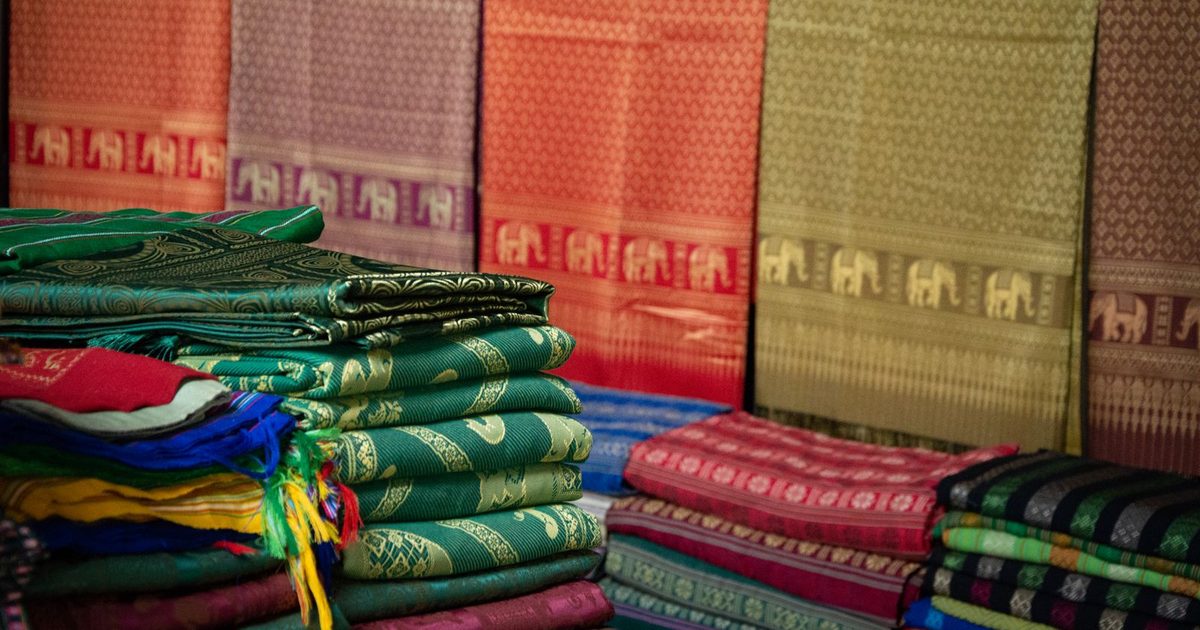 Wholesale Sarees
The first bulk order is the one that teaches most retailers what they got wrong. Buy too little and the range looks thin and nothing can be reordered in time. Buy too much and the working capital that should have funded a second season is sitting on a shelf. There is no universal right number, but there is a method for arriving at yours. This guide covers how to size a first saree bulk purchase against your actual selling capacity rather than against a supplier's minimum.
The common mistake is to start from the supplier's minimum order quantity and work backwards to justify it. That reverses the logic. The right starting point is how many sarees you realistically sell in a week, in the price band you are buying.
Be honest about that figure. New retailers routinely forecast from optimism rather than evidence, and a first order sized on a hoped for rate rather than a proven one is how dead stock is created. If you have no history, size conservatively and plan to reorder rather than committing early.
Convert the rate into a cover period. Deciding that a first order should cover roughly eight to twelve weeks of selling gives you a defensible quantity, allows time to learn what moves, and leaves room to reorder before you run dry.
Treat quantity breaks with suspicion rather than enthusiasm. A discount at the next price level only helps if the extra pieces sell within a reasonable period, and a ten percent saving on stock that sits for a year is not a saving at all. Work out how long the additional quantity will take to clear before deciding whether the break is worth taking.
Then check that number against the supplier's minimum. If the minimum is far above your calculated need, the honest conclusion is that this supplier is not right for your stage, not that your calculation is wrong. A stock holding wholesale dealer will usually serve smaller quantities than a manufacturer can.
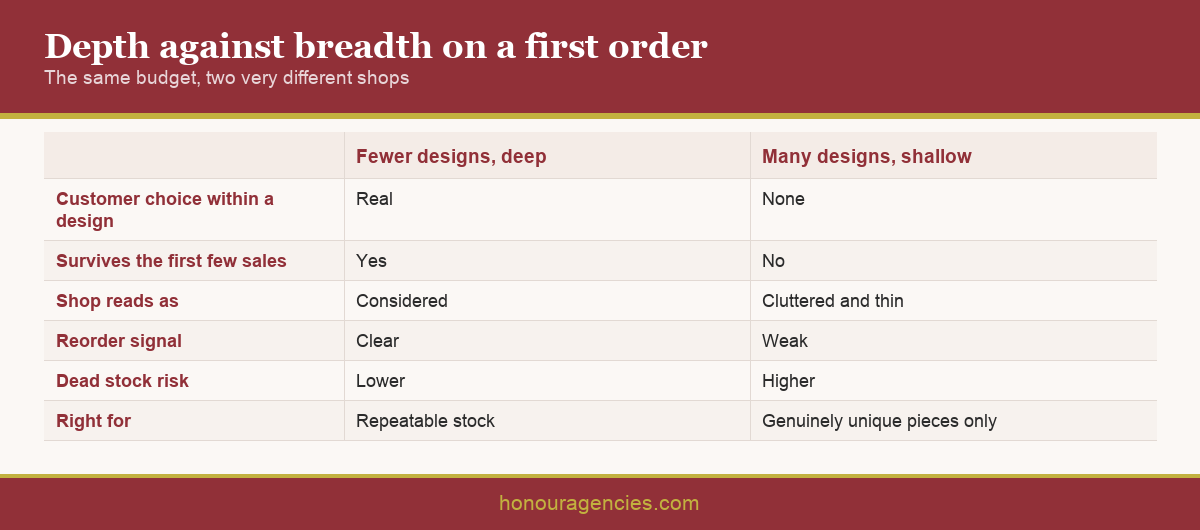
Given a fixed budget, the choice is between many designs shallow or fewer designs deep. For most retailers, depth wins clearly. A design available in several pieces gives customers a choice within it and survives the first few sales, while a single piece disappears and leaves a gap.
Breadth feels safer because it spreads the risk across more bets, but it creates a shop where nothing can be shown in quantity and every popular item is immediately unavailable. The customer experience is of a range that is always almost right.
There is a sensible exception. Genuinely unique pieces, such as hand painted or handloom sarees where variation is the product, are bought shallow by nature and should be. The depth rule applies to repeatable stock, not to individual pieces.
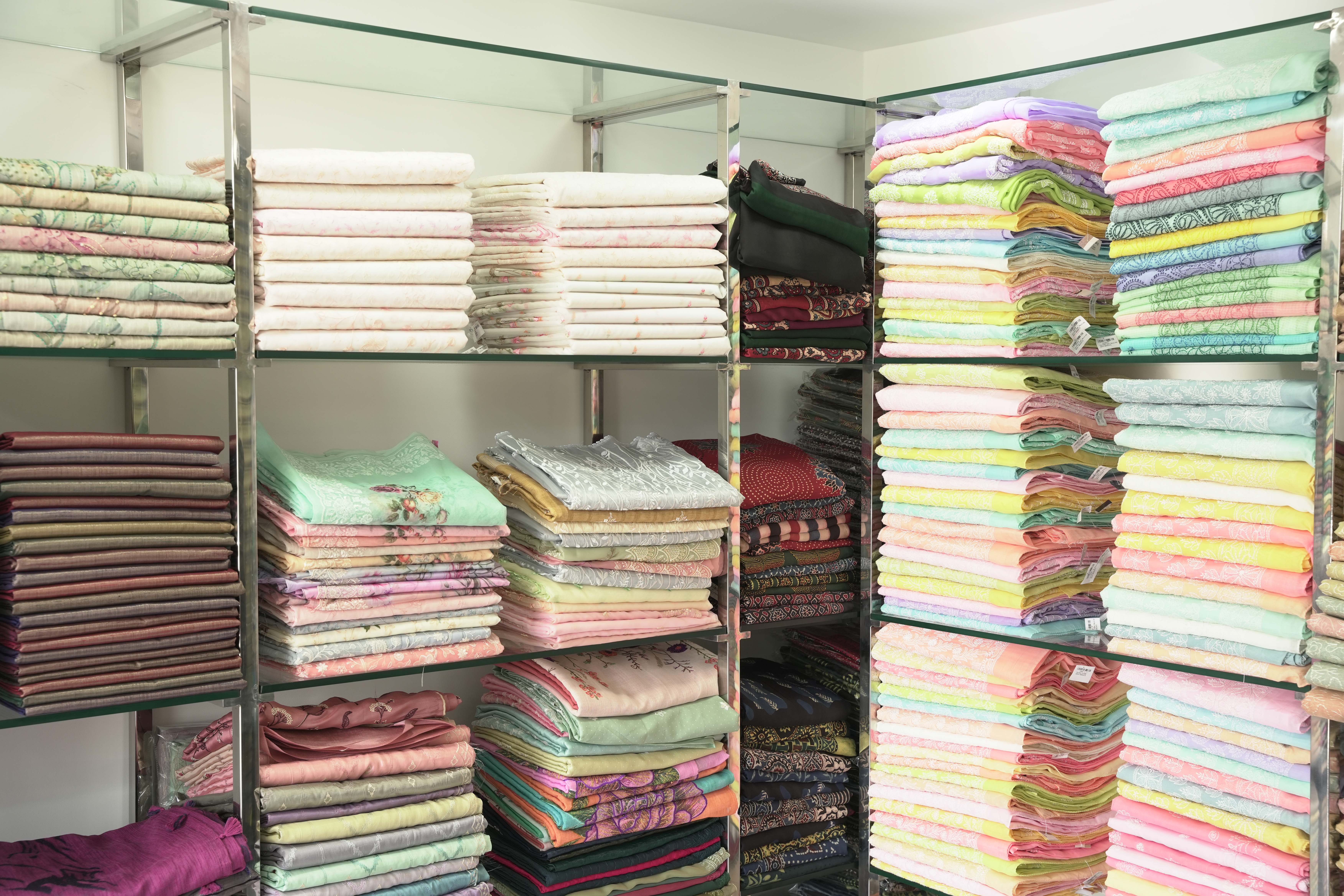
Consider how the stock will look on the floor as well as in a spreadsheet. A shop with three pieces of each of forty designs looks cluttered and indecisive, while the same budget in fifteen designs held properly reads as a considered range. Customers respond to that impression long before they examine any individual piece.
Set a working ratio and adjust it with experience. Many retailers land near seventy percent of the budget in core repeatable designs held deep, with the remainder spread across newer or more distinctive pieces bought shallow to test response. Our guide to stocking a boutique from scratch covers building a first range.
The purchase price is not the whole cost. Stock ties up working capital until it sells, and a large first order can leave a retailer unable to respond when something unexpectedly does well.
Hold a reserve deliberately. Committing every available rupee to the opening order removes your ability to reorder a fast seller, which is precisely the situation you most want to be able to exploit. A common approach is to keep a meaningful proportion of the budget unspent for six to eight weeks.
Ask about payment terms as seriously as about price. Credit changes the effective cost of an order considerably, and established suppliers often extend terms that transform what a small retailer can carry. Terms are usually easier to obtain after a first order has been paid promptly.
Insurance and risk deserve a thought at this scale as well. A concentrated stock holding represents a large proportion of a small retailer's capital sitting in one room, and the cost of covering it is small against the consequence of losing it to water, fire or theft. It is an easy thing to postpone and an expensive one to have postponed.
Count the hidden costs too. Freight, packing, storage space and the time spent handling stock are all real, and they scale with quantity. An order that looks efficient on the rate can be less so once those are included.
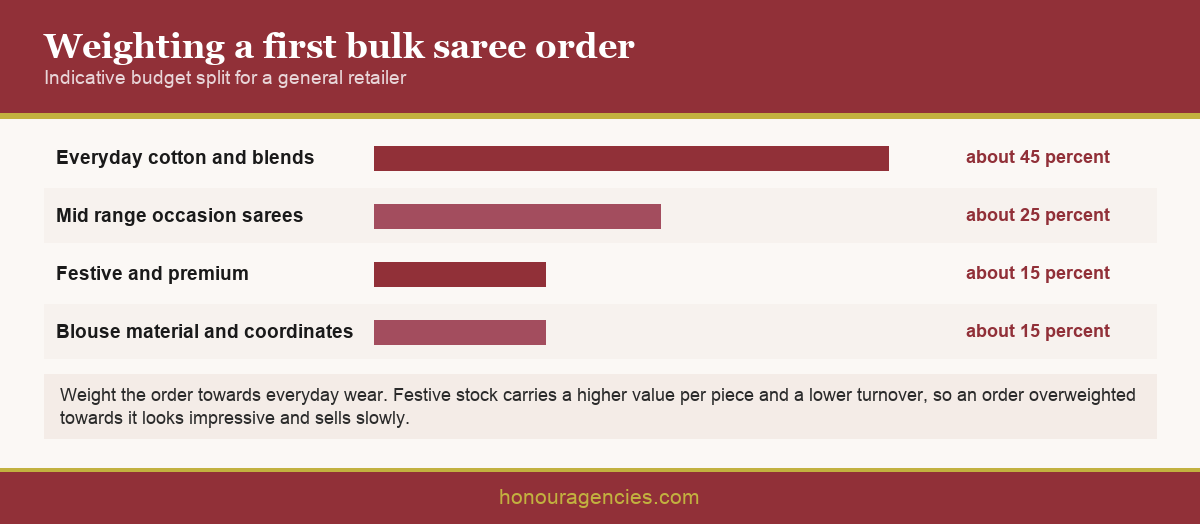
Split the order by what your customers actually buy rather than by what the supplier is showing. Price band, occasion, fabric and colour are the four dimensions that matter, and a first order should cover each sensibly rather than concentrating in one.
Weight the assortment towards the everyday. Occasion and festive stock carries higher value per piece and lower turnover, and a first order overweighted towards it will look impressive and sell slowly. Daily wear cotton and blended sarees usually pay the rent.
Cover the colour spectrum without spreading thin. A handful of grounds that recur across your customers' preferences, held in depth, beats one piece in every colour the supplier offers.
Buy blouse material alongside. Customers judge a shop by whether they can complete the purchase, and a saree without a matching blouse piece often does not close. Our note on the categories every retail store should stock covers assortment planning.
Ask the reorder question before you place the first order. Which of these designs can be repeated, in what minimum quantity, with what lead time. A design you cannot repeat caps your upside at the quantity you happened to take.
Record what you bought in a form you can compare against sales. Design, quantity, cost, date received. Without that record the first order teaches you nothing, and the second one repeats its mistakes.
Review at four weeks rather than at the end of the season. Early sales rates identify the movers while there is still time to reorder them and while the slow movers can still be addressed with display changes rather than discounts.
Act decisively on what you learn. Reorder the movers quickly, since popular designs sell out at the supplier too, and stop reordering the categories that are not working rather than hoping they improve. Retailers who handle bulk saree orders well are usually just the ones reviewing early and acting on it.
A first saree bulk purchase should be sized from a realistic weekly sales rate across an eight to twelve week cover period, weighted towards depth in fewer designs, held back from spending the entire budget, and assembled across price band, occasion, fabric and colour. Ask what can be reordered before you commit, record what you bought, and review at four weeks. That approach turns the first order into information rather than a gamble. Honour Agencies has supplied wholesale sarees from Ernakulam for 35 years. To discuss a first order, contact our team.
Q: How large should a first bulk saree order be? A: Size it from your realistic weekly sales rate across roughly eight to twelve weeks of cover, not from the supplier's minimum order quantity or the next quantity discount.
Q: Should I buy many designs or fewer in depth? A: Depth wins for repeatable stock. A design held in several pieces survives the first sales and gives customers choice, while a single piece disappears and leaves a gap in the range.
Q: Are unique pieces an exception to the depth rule? A: Yes. Hand painted and handloom sarees where variation is the product are bought shallow by nature, because holding many near identical pieces defeats the individuality that justifies their price.
Q: Should I spend my whole budget on the first order? A: No. Keep a meaningful proportion unspent for six to eight weeks so you can reorder whatever sells unexpectedly well. Committing everything removes your ability to respond to success.
Q: What if the supplier's minimum exceeds what I need? A: Then that supplier is not right for your current stage. A stock holding dealer will usually serve smaller quantities than a manufacturer, which is the appropriate route for a smaller retailer.
Q: How should the assortment be split? A: Across price band, occasion, fabric and colour, weighted towards everyday wear. Festive stock carries higher value per piece and lower turnover, so overweighting it produces a slow selling range.
Q: When should I review the first order? A: At four weeks, not at the end of the season. Early sales rates identify the movers while you can still reorder them and while slow movers can be addressed by display rather than discount.
Q: What should I ask before placing the order? A: Which designs can be repeated, at what minimum quantity and with what lead time. A design that cannot be reordered limits your upside to whatever quantity you happened to buy.
Q: Do payment terms matter as much as price? A: Often more, for a small retailer. Credit changes what you can carry, and terms usually become available after a first order has been paid promptly, so build that record deliberately.
Q: Should blouse material be bought with the sarees? A: Yes. A saree without a matching blouse piece frequently fails to close the sale. Our guide to essential wholesale materials covers what else to stock alongside.


Or login with