
Women danim jacket
$249.00

Red formal dress
$129.00

Man winter blazer
$149.00$99.00
Subtotal$477

 Running Material
Floral prints sell more consistently than any other category in Indian retail, and they are also where the most dead stock accumulates. The reason is that buyers choose prints the way customers do, by liking them, rather than by asking whether the scale, the repeat and the colourway suit what their customers actually buy. Choosing floral fabric wholesale well is a commercial skill, not a taste one. This guide covers how to select, test and stock floral prints so the range turns rather than sits.
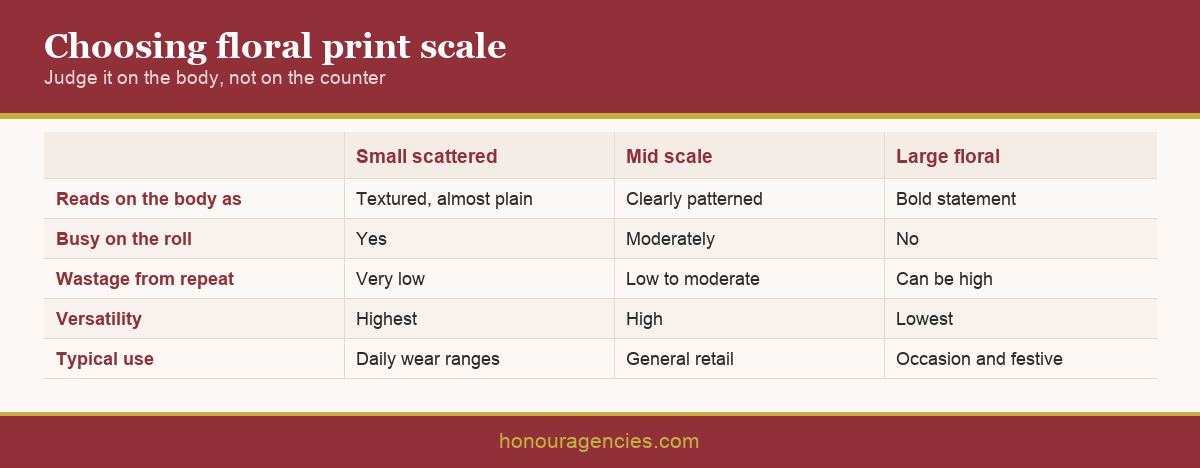
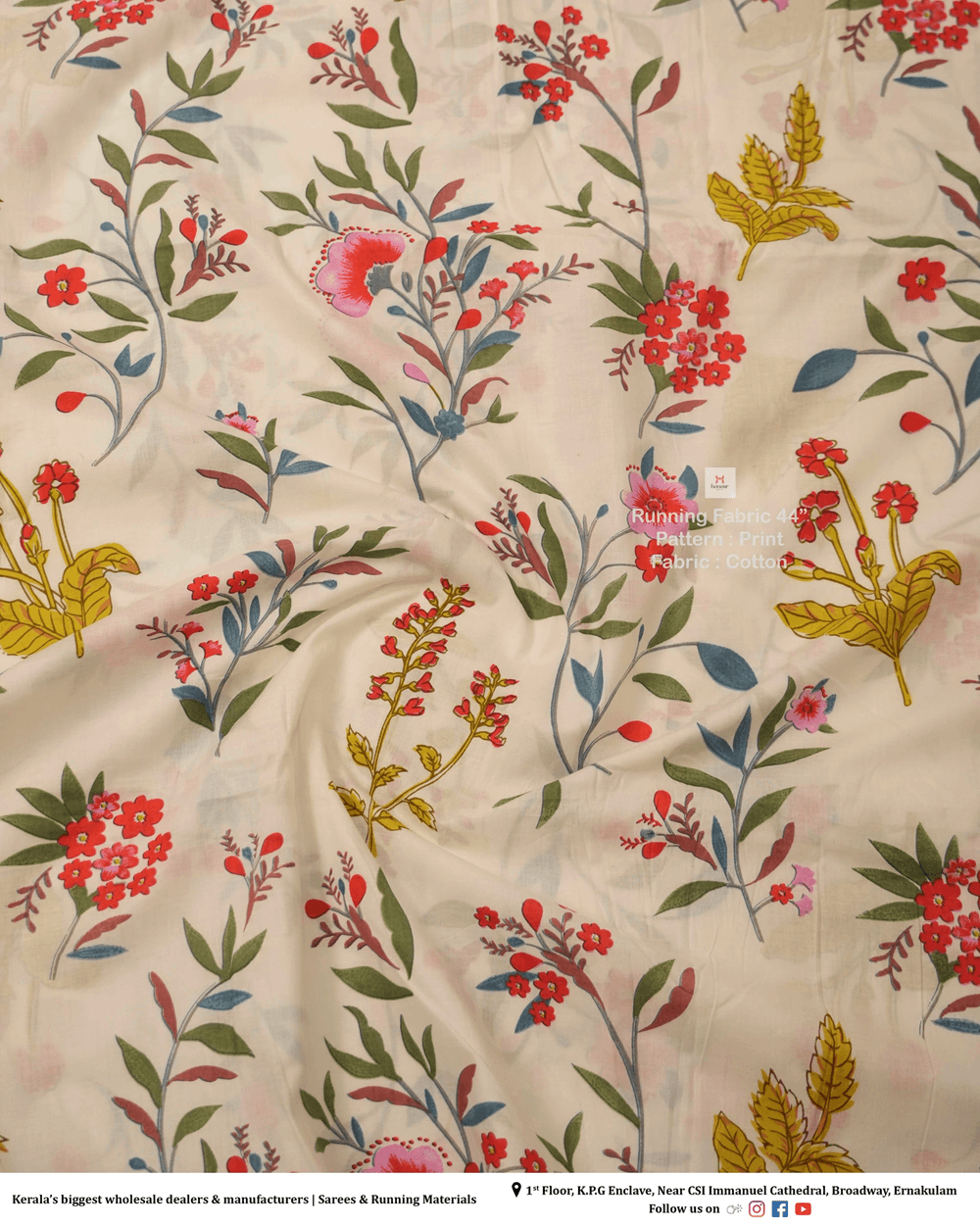
Scale is the first decision and the one most often made badly. A large floral that looks striking unrolled across a counter can overwhelm a garment once it is cut, gathered and worn. Small scattered prints read as busy on a roll and settle down beautifully in a finished piece.
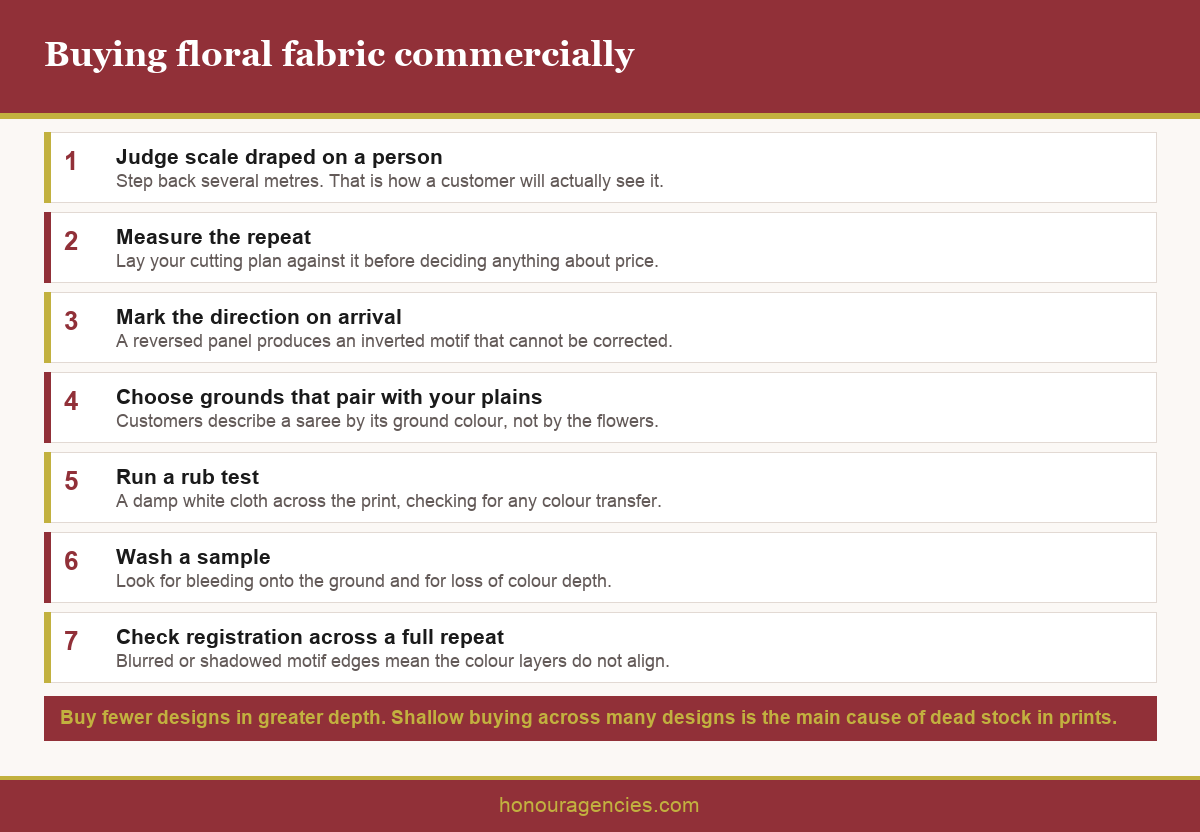
Judge scale on the body, not on the table. Drape a length over a person, gather it the way the garment will gather, and step back several metres. That is how a customer will see it, and prints that look wonderful at arm's length often disappear or shout at conversational distance.
Repeat governs your wastage. A short repeat cuts almost like plain cloth, while a large repeat forces panels to be placed where the pattern works rather than where the cloth is efficient. Ask for the repeat measurement and lay your cutting plan against it before ordering.
The base cloth carries the print and deserves its own decision. The same floral on a crisp cotton, a soft viscose and a polyester georgette produces three genuinely different products at three different price points. Retailers who select the design first and accept whatever base it is printed on frequently end up with a print they like on a cloth their customers do not.
Direction matters too. Many florals have a definite up and down, and a cutter who reverses a panel produces an inverted motif that cannot be corrected. Mark the direction on the roll when it arrives rather than relying on whoever cuts it to notice.
Most floral designs are offered in several colourways, and the temptation is to take the one you like. The commercial question is different. Which colourway suits the skin tones, the season and the occasions your customers buy for.
Ground colour drives the sale more than the flowers do. A customer describes a saree as the navy one or the cream one, not by the botany. Choose grounds that sit in your existing range rather than introducing an orphan shade that pairs with no blouse fabric you stock.
Consider the blouse and the coordinating plain. A floral that has no matching plain available is harder to sell, because customers want a blouse piece and often a coordinating dupatta or petticoat. Ask the supplier what plain shades match the print's ground and pick within them.
Occasion is worth separating from season. A floral bought for daily wear needs to survive frequent washing and look unremarkable in an office or a classroom, while one bought for a function can be bolder and is washed rarely. Buying both from the same shelf without distinguishing them is how a range ends up with nothing quite right for either use.
Season shapes demand. Lighter grounds and airier florals move in the warm months, while richer grounds and denser designs sell into the festive and wedding periods. Buying without reference to the calendar is the fastest way to build stock that has to be discounted. Our seasonal fabric buying calendar sets out the rhythm.
How the print was applied decides how it behaves in a customer's washing machine. Screen printing, whether rotary or flat bed, is the workhorse of volume production and produces good, economical results with a limited number of colours per design.
Digital printing handles unlimited colours, photographic detail and fine gradation, and it suits short runs and boutique ranges. It generally costs more per metre and the depth of colour can be shallower on some fabrics, so check a sample rather than assuming. The underlying processes are documented under textile printing.
Discharge and pigment prints feel different in the hand. Pigment printing sits on the surface and can stiffen the cloth or crack over time, while reactive and discharge prints penetrate the fibre and keep the fabric soft. Rub a printed area between your fingers to judge which you are being offered.
Test fastness rather than trusting a claim. Rub a damp white cloth firmly across the print and see whether colour transfers. Then wash a sample and check for bleeding onto the ground and for loss of depth. A print that bleeds is a return waiting to happen.
Buy depth rather than breadth. Four designs held in quantities large enough to cut full garments will outsell twelve designs in lengths that force a customer to choose something else. Dead stock in prints is almost always the result of buying too many designs too shallow.
Ask what the supplier can repeat. Some floral designs are seasonal one time runs and some are carried year round, and the difference matters enormously if a print sells well. A design you cannot reorder caps your upside at whatever you happened to buy.
Look at the join between repeats as well as the motifs. On rotary printed cloth a faint line can appear where the screen cylinder completes its rotation, and once you have seen it on a garment you cannot unsee it. Unroll a couple of full repeats and look along the length rather than at a single motif.
Check shade and print registration across the roll. Misregistration, where the colour layers of a screen print do not align, shows as a blurred or shadowed edge on the motifs. It is obvious on an unrolled length and easy to miss on a folded sample.
Approve a physical cutting and require the wholesale fabric supplier to hold the matching piece against your account, then compare a cutting from any repeat run before the full quantity ships. Print lots vary in both ground shade and ink depth.
Show florals draped rather than folded. A print folded on a shelf shows one small area and reads as a fragment, while a draped length shows the repeat and the scale as a customer will actually experience them.
Pair each floral with its coordinating plain on display. Customers buy the combination, and putting a matching blouse fabric beside the print converts far better than expecting the customer to imagine it.
Rotate by age and mark down deliberately rather than late. Prints date faster than plain cloth, and a design carried through two seasons loses value quickly. A planned reduction at the end of a season recovers more than a reluctant one a year later.
Keep a simple record of what sold and how quickly. Over two or three seasons that record tells you which scales, grounds and colourways your particular customers buy, which is worth more than any general advice about trends. Retailers stocking trending wholesale collections usually keep exactly that kind of note.
Floral fabric wholesale works when prints are chosen commercially rather than personally. Judge scale on the body, measure the repeat against your cutting plan, choose grounds that pair with plains you already stock, test the print for rub and wash fastness, and buy fewer designs in greater depth. That approach turns floral from a dead stock risk into the most dependable category on the shelf. Honour Agencies has supplied wholesale fabrics and sarees from Ernakulam for 35 years. To discuss a print requirement, contact our team.
Q: How do I choose the right print scale? A: Judge it draped on a person and viewed from several metres, not flat on a counter. Large florals that look striking unrolled often overwhelm a finished garment, while small prints settle beautifully once cut.
Q: What is a print repeat and why does it matter? A: The distance before the design begins again. A short repeat cuts almost like plain cloth, while a large repeat forces panel placement and raises wastage, effectively increasing the real cost per garment.
Q: Does floral fabric have a direction? A: Many designs do. A reversed panel produces an inverted motif that cannot be corrected, so mark the direction on the roll when it arrives rather than expecting the cutter to notice it.
Q: Which colourway should I buy? A: The one that fits your existing range. Ground colour drives the sale more than the flowers do, so choose grounds that pair with plain fabrics and blouse pieces you already stock.
Q: How do I test print fastness? A: Rub a damp white cloth firmly across the print to check for colour transfer, then wash a sample and look for bleeding onto the ground and loss of depth. A print that bleeds will generate returns.
Q: What is the difference between pigment and reactive prints? A: Pigment print sits on the fabric surface and can stiffen the hand or crack over time. Reactive and discharge prints penetrate the fibre and keep the cloth soft. Rub the printed area to tell them apart.
Q: Is digital printing better than screen printing? A: Not better, different. Digital handles unlimited colours and fine detail and suits short runs, while screen printing is more economical at volume with a limited colour count. Check a sample either way.
Q: How many floral designs should a retailer stock? A: Fewer, in greater depth. Four designs in cuttable quantity will outsell twelve in short lengths, and shallow buying across many designs is the main cause of dead stock in prints.
Q: Can floral prints be reordered? A: Some are seasonal one time runs and others are carried year round. Ask before buying, because a design you cannot repeat caps your upside at whatever quantity you happened to take.
Q: How should floral fabric be displayed? A: Draped rather than folded, and paired with its coordinating plain. Our guide to stocking retail materials covers display and range planning.

Or login with