
Women danim jacket
$249.00

Red formal dress
$129.00

Man winter blazer
$149.00$99.00
Subtotal$477

 General
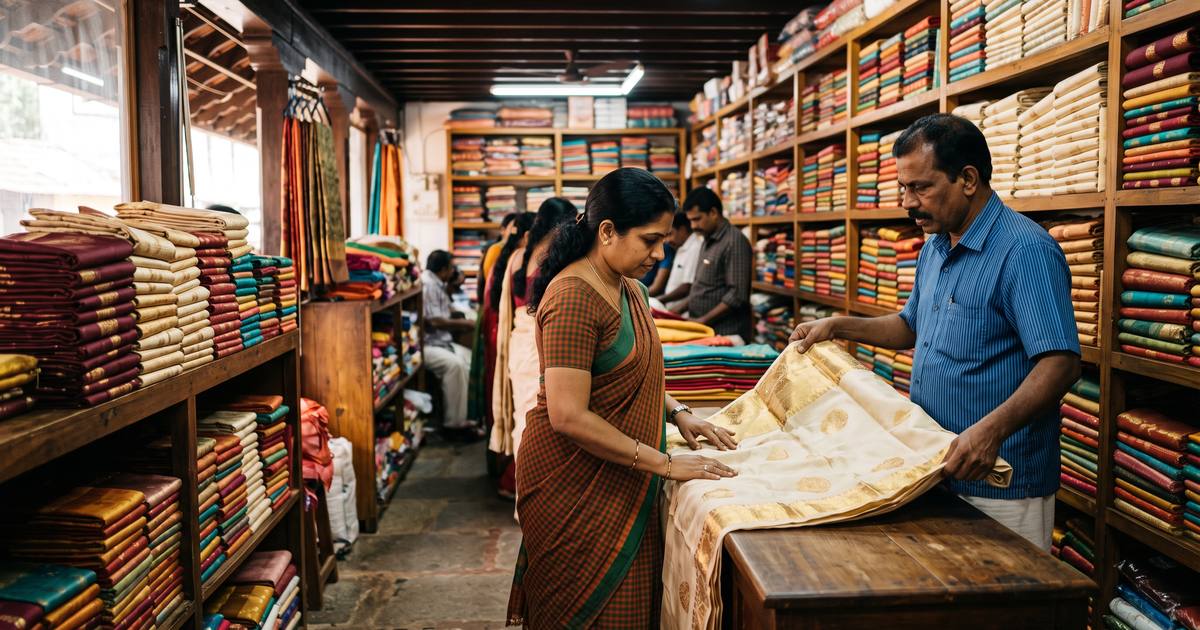
Retailers who source in bulk know that wholesale saree shops in Ernakulam sit at the centre of Kerala's textile trade. The district's Broadway market has supplied boutiques, uniform buyers and reselling businesses for decades, and it remains the first stop for buyers who want to see fabric before they commit. This guide explains what the Ernakulam market offers, how its streets are organised, what to prepare before a buying trip, and how to build a supplier relationship that lasts beyond a single order.
Ernakulam is the commercial heart of Kochi and has been a textile distribution hub for generations. Its position on the coast, its rail and road links to Tamil Nadu and Karnataka, and its long established trading families have combined to create a market where a buyer can source Kerala kasavu, cotton, silk and printed ranges within a few streets of each other.
That density is the real advantage. A retailer visiting a single manufacturer sees one range at one price point. A retailer walking Broadway sees a dozen in an afternoon, which makes it far easier to judge whether a quoted rate is fair, whether a minimum order quantity is reasonable for the category, and whether a design range will sell across a full season rather than a single festival. Buyers weighing Ernakulam against other Kerala markets should still compare collections and pricing across the state before settling on a single sourcing base.
Broadway is a working wholesale street rather than a retail mall, and it rewards buyers who understand its layout. Shops cluster loosely by category, so fabric and running material dealers tend to sit apart from finished saree wholesalers, and uniform saree specialists occupy their own pocket of the market.
Most establishments operate on a first floor or upper floor rather than at street level, which is why a buyer scanning shopfronts alone will miss a large share of the genuine wholesale trade. Honour Agencies, for example, trades from the first floor of K.P.G Enclave near CSI Immanuel Cathedral. Serious wholesale operations rarely need street frontage because their customers arrive by appointment and by reputation. Ask locally rather than relying on street signage, because the dealers operating at genuine wholesale scale are rarely the most visible ones.
Trading is busiest in the weeks before Onam, Vishu and the wedding season, when stock moves fastest and new ranges land first. That is the best time to see fresh designs and the worst time to expect unhurried attention. Buyers placing a first order often do better in a quieter month, when a dealer has time to walk through pricing tiers and sample policy properly.
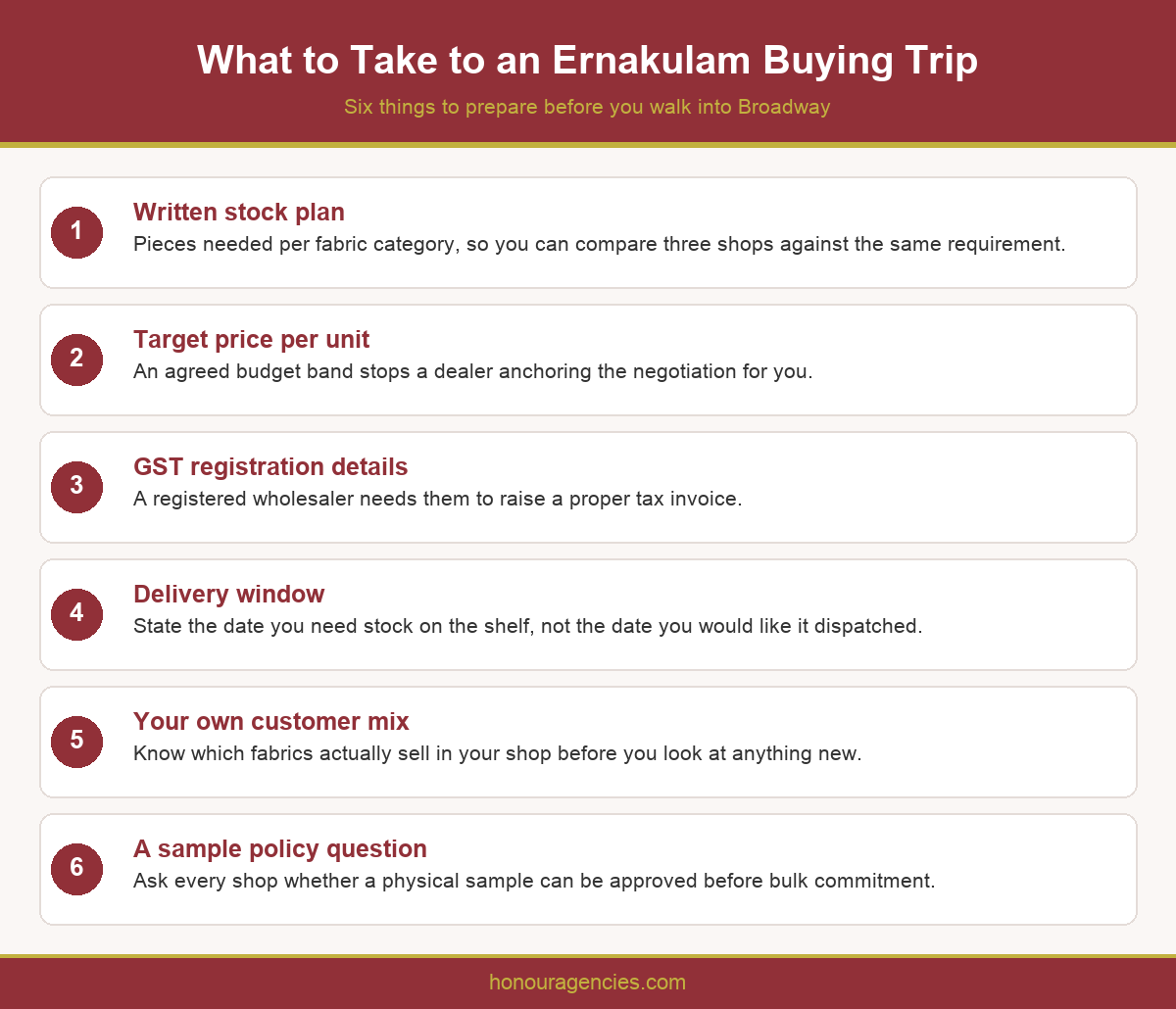
Walking into a wholesale saree shop without a plan is the most common mistake a new boutique owner makes. Bring a written stock plan that states how many pieces you need per fabric category, your target price per unit and the delivery window you are working to. Bring your GST registration details, because a registered dealer will need them to raise a proper invoice.
Decide in advance which categories your customers actually buy. Cotton moves steadily through the year, silk and semi silk carry higher price points and sell into festive and wedding demand, and lighter fabrics such as georgette suit both formal and daily wear ranges. A buyer who knows their own mix can compare three shops meaningfully. A buyer without one ends up buying what the last dealer showed them. The fuller process is set out in our complete wholesale saree buying guide.
Ask what the minimum order quantity is for each fabric category, how pricing tiers change with volume, whether a physical sample can be approved before a bulk commitment, what the advance and balance payment split looks like, and how a quality complaint is handled after delivery. A dealer who answers all five clearly is a dealer worth returning to.
The lowest rate in the market is rarely the best commercial outcome. What decides whether a wholesale relationship is profitable is consistency: whether the shop can repeat an order accurately in eight weeks, whether the fabric in the second consignment matches the first, and whether someone answers the phone when a delivery runs late.
Check that the business is properly registered and can produce a GST number, that the address is real and visitable rather than a listing, and that a sample is available before you commit to volume. Ask how long the shop has traded. Honour Agencies has operated from Broadway for 35 years, which means a buyer can check a track record rather than take a claim on trust. Judging the goods themselves is a separate skill, and it rests on weave density, border alignment and colour fastness rather than on how a piece looks folded on a shelf.
Not every buyer can reach Broadway in person, and the market has adapted. Established shops now share catalogues over WhatsApp, run video walkthroughs of current stock and dispatch across India and overseas. That removes the travel cost but raises the importance of everything above, because you are now judging a supplier without touching the fabric.
For remote buyers the sequence matters. Ask for a live video call rather than a photo set, approve a physical sample posted to you before any bulk order, and get pricing and payment terms in writing. Honour Agencies maintains a product video catalogue for exactly this reason, so buyers can see drape and detail before committing.
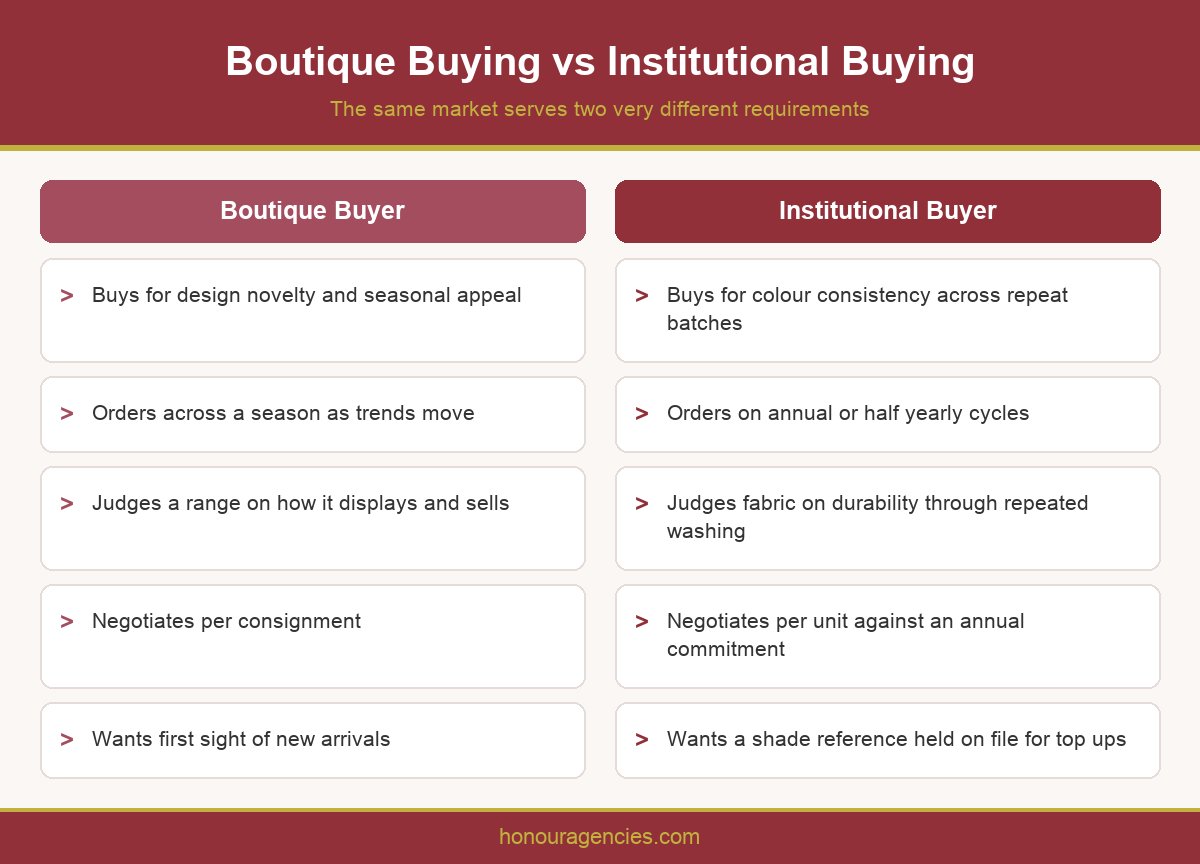
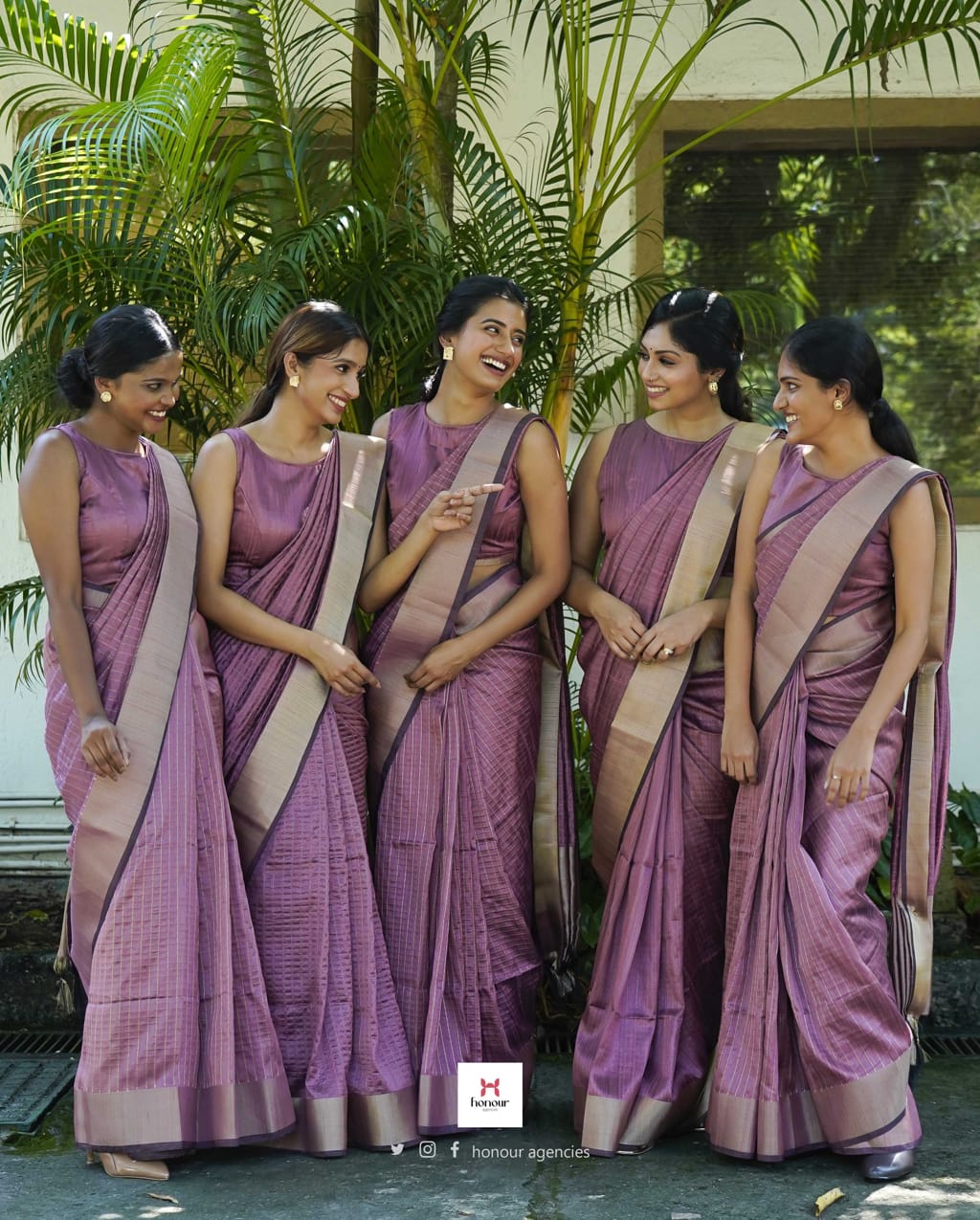
A large share of Ernakulam's wholesale saree trade is institutional rather than fashion led, and buyers new to the market often miss it. Schools, hospitals, hotels and corporate front offices across Kerala source uniform sarees in volume, usually on annual or half yearly cycles, and several Broadway dealers specialise in exactly that work.
Institutional buying follows different rules from boutique buying. Colour matching across repeat batches matters more than design novelty, because a school ordering forty sarees this year needs them to match the eighty it ordered last year. Sizing consistency, fabric durability through repeated washing and the ability to hold a shade reference on file are the qualities that decide whether a supplier keeps the account. Price per unit is negotiated against an annual commitment rather than a single consignment.
Buyers running an institutional tender should ask specifically whether a dealer keeps shade references, how it handles a mid year top up order, and what happens if a batch arrives off shade. Our guide to uniform sarees wholesale for schools and corporates covers the printed design side of this trade in more detail.
Ernakulam earns its reputation because it lets a retailer compare real stock, real pricing and real people in one place. The buyers who get the most out of the wholesale saree shops in Ernakulam are the ones who arrive prepared, ask the same five questions of every dealer, and judge a shop on consistency rather than on the first quoted rate. Honour Agencies has supplied boutiques, institutional buyers and resellers from Broadway for 35 years. To plan a first order, get in touch or read more about our wholesale operation.



Or login with