
Women danim jacket
$249.00

Red formal dress
$129.00

Man winter blazer
$149.00$99.00
Subtotal$477

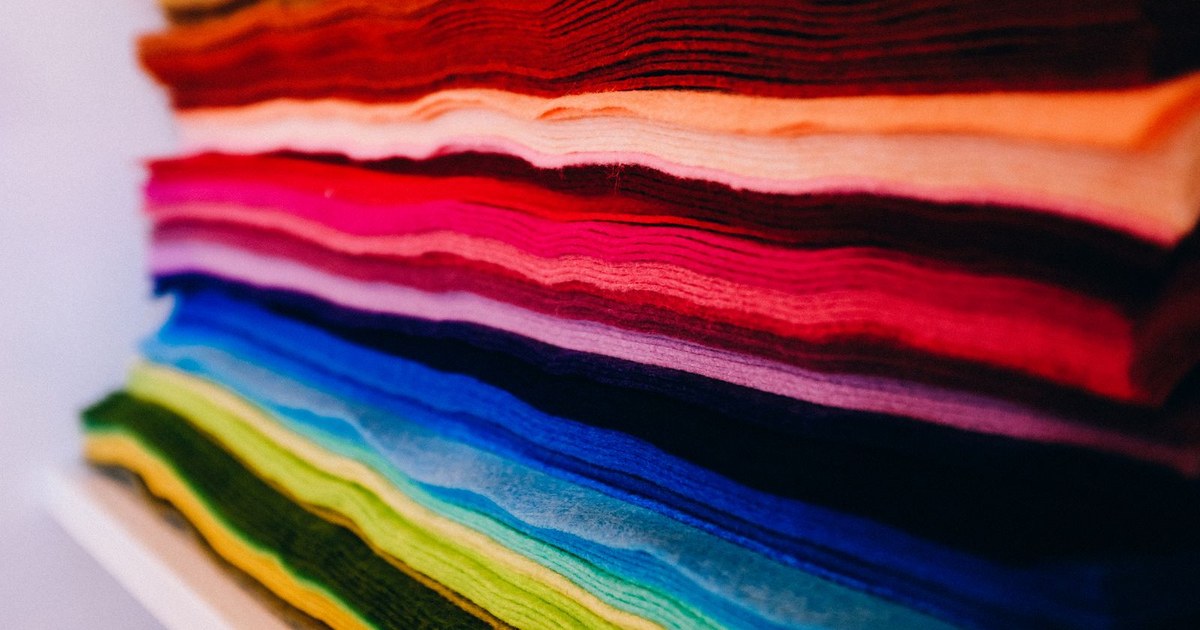 Wholesale Blouse Materials
Blouse material is a small purchase with a large influence on whether a saree sells. Customers choose the saree and then judge the shop by how easily they can find a blouse that matches it. Silk cotton has become the default answer because it holds structure, takes deep colour and stays comfortable in Kerala heat. This guide covers what to check when buying silk cotton blouse material wholesale, and how to stock it so the matching conversation goes well.
Silk cotton is a blend of silk and cotton yarn, most often woven with one fibre in the warp and the other in the weft. It aims to combine silk's lustre and colour depth with cotton's breathability and easier care, and at a sensible ratio it does exactly that.
The ratio is what varies. A cloth with a higher silk content has more sheen, drapes more softly and costs more. A higher cotton content is more matt, holds structure better and washes more easily. Neither is superior, but they behave differently enough that the ratio must appear in the specification.
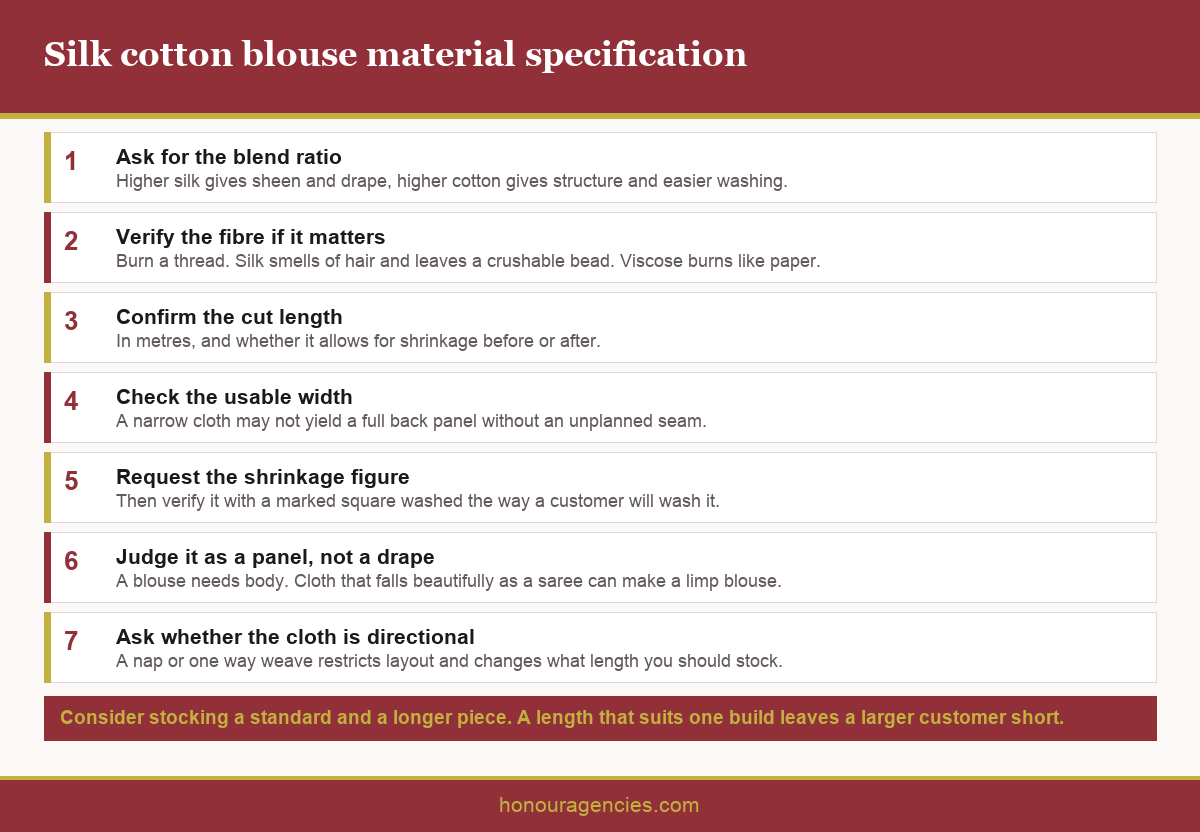
Watch the terminology. Some cloth sold as silk cotton contains viscose rather than silk, and some contains no silk at all. Pull a thread and burn it if it matters commercially, since silk smells of burning hair and leaves a brittle crushable bead, while viscose burns fast like paper.
Handle also changes after stitching. A cloth with a crisp finish sews cleanly and holds a neckline, while a very soft blend needs interfacing at the neck and armhole to keep its shape. If your customers use tailors who do not routinely interface, a slightly crisper cloth produces better finished blouses without any change in what the tailor does.
Weight decides the structure. Blouse material generally sits heavier than saree cloth because a blouse needs body to hold its shape, and a fabric that drapes beautifully as a saree often makes a limp blouse. Handle the cloth as a stiff panel rather than as a drape when judging it. Our blouse material sourcing guide covers the wider fabric comparison.
Blouse material is usually sold as a cut piece, and the length of that piece is the single largest source of customer complaint in the category. A piece cut generously for a standard build leaves a larger customer short, and the shop takes the blame.
Ask the supplier for the cut length in metres or centimetres, not in vague terms, and confirm whether it is measured before or after any shrinkage allowance. The difference of ten centimetres decides whether a tailor can make a full sleeve.
Consider stocking two lengths. A standard piece and a longer piece covers the size range without over investing, and it turns an awkward conversation into an easy one. Customers remember the shop that had the right length.
Directional cloth complicates cut pieces further. A fabric with a nap, a one way weave effect or a printed direction cannot be laid out as freely, and a piece cut without allowing for that yields panels that do not match. Ask whether a cloth is directional before deciding what length to stock.
Width matters as much as length. A narrow cloth may not yield a full back panel in one piece, which forces a seam a tailor did not plan for. Check the usable width inside the selvedge rather than the quoted roll width.
Cotton in the blend means the cloth will move. A blouse cut to fit and then washed can become a blouse that does not, and the customer experiences that as poor quality rather than as normal fibre behaviour.
Ask whether the material is pre shrunk and request the residual shrinkage figure as a percentage. Then verify it. Cut a measured square, mark it, wash it the way a customer will, dry it the same way and measure again.
Test in both directions, because cotton usually moves more along the length than across the width. A blouse that shortens without narrowing changes proportion in a way that is immediately visible when worn.
Pass the finding on. If a cloth shrinks meaningfully, tell customers to have it washed before stitching, or advise the tailor to allow for it. That single piece of advice prevents most of the returns this category generates and marks the shop as knowledgeable.
Blouse material sells on matching, so stock decisions are really palette decisions. The question is not which colours you like but which grounds appear across the sarees you carry, and whether you hold a blouse shade for each of them.
Build the palette from your own saree stock. Walk the shelves, list the ground colours that recur, and make sure each has a close blouse match plus one deliberate contrast option. Customers increasingly buy contrast blouses, and a shop offering only exact matches loses those sales.
Track what leaves the shelf rather than what you expect to. Two seasons of simple notes on which blouse shades sold and how quickly will tell you more about your own customers than any general guidance, and it usually reveals that a small number of colours carry most of the turnover.
Hold the neutrals deep. Black, white, cream, gold and a good mid grey work with an enormous proportion of sarees, and running out of them costs more sales than running out of an unusual shade ever will.
Check the match under the light customers will see it in. A blouse fabric that matches perfectly under a shop tube light can read as a half tone off in daylight, and customers do notice. Where possible, compare the pieces near a window or under a neutral light.
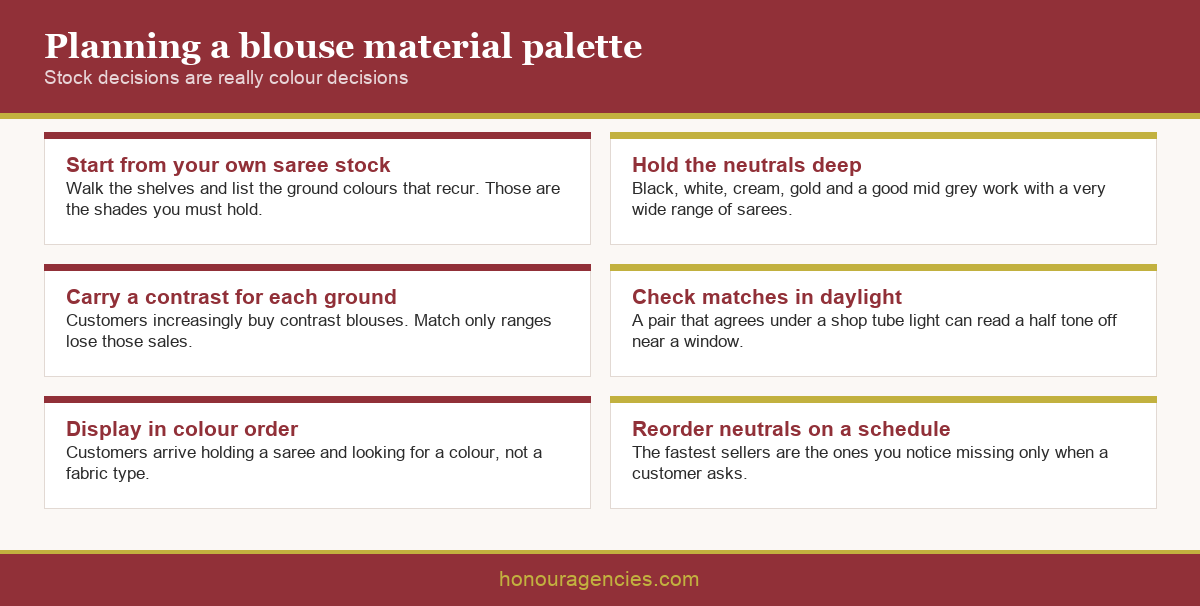
Display blouse material in colour order rather than by fabric type. Customers arrive holding a saree and looking for a colour, and a colour ordered rack answers that question in seconds while a fabric ordered one does not.
Keep cut pieces folded uniformly and visibly, with the same face showing on every piece. A rack where every piece shows a consistent face makes comparison easy, and comparison is exactly what the customer is trying to do.
Reorder neutrals on a schedule rather than on discovery. The shades that sell fastest are the ones you notice are missing only when a customer asks, so a standing reorder for core colours prevents most gaps.
Approve a physical swatch for each core shade and require the wholesale fabric supplier to hold the matching piece against your account. Blouse fabric is bought repeatedly in small quantities, which is exactly the situation where shade drift between lots becomes visible on a shelf. Retailers who stock cotton blouse material alongside silk cotton usually keep one reference file for both.
Silk cotton blouse material wholesale is a small line that carries a lot of weight in a saree shop. Get the blend ratio into the specification, confirm cut length and usable width, test shrinkage yourself and advise customers accordingly, and plan the palette from your own saree stock with the neutrals held deep. That turns blouse material from an afterthought into the thing that closes saree sales. Honour Agencies has supplied wholesale fabrics and sarees from Ernakulam for 35 years. To discuss a blouse material requirement, contact our team.
Q: What is silk cotton blouse material? A: A blend of silk and cotton yarn, usually with one fibre in the warp and the other in the weft. It combines silk's lustre and colour depth with cotton's breathability and easier care.
Q: Does the blend ratio matter? A: Considerably. Higher silk content gives more sheen and softer drape at a higher price, while higher cotton content is more matt, holds structure better and washes more easily. Ask for the ratio in writing.
Q: How do I check the fabric really contains silk? A: Pull a thread and burn it. Silk burns slowly, smells of burning hair and leaves a brittle bead that crushes to powder. Viscose burns fast like paper with little residue and no hair smell.
Q: What cut length should blouse pieces be? A: Ask for the figure in metres and confirm whether it allows for shrinkage. Consider stocking a standard and a longer piece, since a length that suits one build leaves a larger customer short.
Q: Should blouse material be washed before stitching? A: Where the cloth shrinks meaningfully, yes. Test a marked square yourself, then advise customers or their tailors to allow for it. That advice prevents most returns in this category.
Q: Why does blouse fabric need to be heavier than saree fabric? A: A blouse needs body to hold its shape, while a saree needs to drape. A cloth that falls beautifully as a saree often makes a limp blouse, so judge blouse material as a panel rather than a drape.
Q: How should blouse material be displayed? A: In colour order rather than by fabric type. Customers arrive holding a saree and looking for a matching or contrasting colour, and a colour ordered rack answers that in seconds.
Q: Which colours should be held in depth? A: The neutrals. Black, white, cream, gold and a good mid grey work with a very wide range of sarees, and running out of them loses more sales than any unusual shade.
Q: Should I stock contrast options as well as matches? A: Yes. Customers increasingly choose contrast blouses, so a shop offering only exact matches loses those sales. Hold one deliberate contrast option alongside each recurring saree ground.
Q: How do I stop blouse shades drifting between orders? A: Approve a physical swatch for each core shade and have the supplier hold the matching piece. Our guide to buying blouse fabric in bulk covers reorder discipline.


Or login with