
Women danim jacket
$249.00

Red formal dress
$129.00

Man winter blazer
$149.00$99.00
Subtotal$477

 Wholesale Sarees
The first order with a new wholesaler is the riskiest transaction a retailer makes. Money moves before goods do, the quality is unknown, and the recourse if something goes wrong is whatever the relationship supports, which at that point is nothing. Verification is not suspicion, it is ordinary commercial care, and most of it takes an afternoon. This guide sets out how to verify a saree wholesaler before committing, in the order the checks are worth doing.
Ask for the business name, the registered address and the GST registration number, and check that the name on the invoice matches the name on the registration. A mismatch between the trading name and the invoicing entity is common and worth understanding before money moves.
Verify the GST number rather than accepting it. The government portal allows a registration number to be checked directly, and a number that does not resolve, or resolves to a different business, is a clear stop signal.
Check for a registered business presence beyond a phone number, such as a listing on the MSME registry. An MSME or Udyam registration, a listed address, a landline and a website that predates your enquiry all point to a settled business rather than an opportunistic one.
Check the online footprint for consistency rather than for polish. A business whose name, address and phone number match across its own website, its listings and its invoices is straightforward to verify, while one where those details differ in each place is either careless or deliberately hard to pin down. Neither is what you want on a first order.
Look at how long the business has traded. Longevity is not a guarantee of quality, but a wholesaler operating for years under the same name in the same market has a reputation to protect, and that is worth something on a first order.
Ask for two or three existing customers in your own trade whom you can speak to directly. A confident wholesaler provides them readily. Reluctance at this stage is informative, particularly when the request is normal in the trade.
Ask the referees the right questions. Not whether they are happy, which everyone says, but what happened the last time a delivery was late or a quality problem arose. How a supplier behaves when something goes wrong is the only reliable predictor of how they will treat you.
Ask about consistency across orders too. A supplier whose first delivery is excellent and whose third is careless is a common pattern, and only an existing customer can tell you which kind you are dealing with.
Weigh reviews carefully rather than dismissing or trusting them. Public reviews of wholesalers are thin and easily manipulated, so a small number of detailed reviews describing specific transactions is worth far more than a large number of short generic ones. Read what the complaints say rather than counting them.
Check the market view where you can. In a concentrated trading area, other retailers and neighbouring shops know who pays, who delivers and who disputes. That informal information is often more current than anything documented. Our guide to choosing a reliable supplier covers assessing a supplier's fit beyond verification.
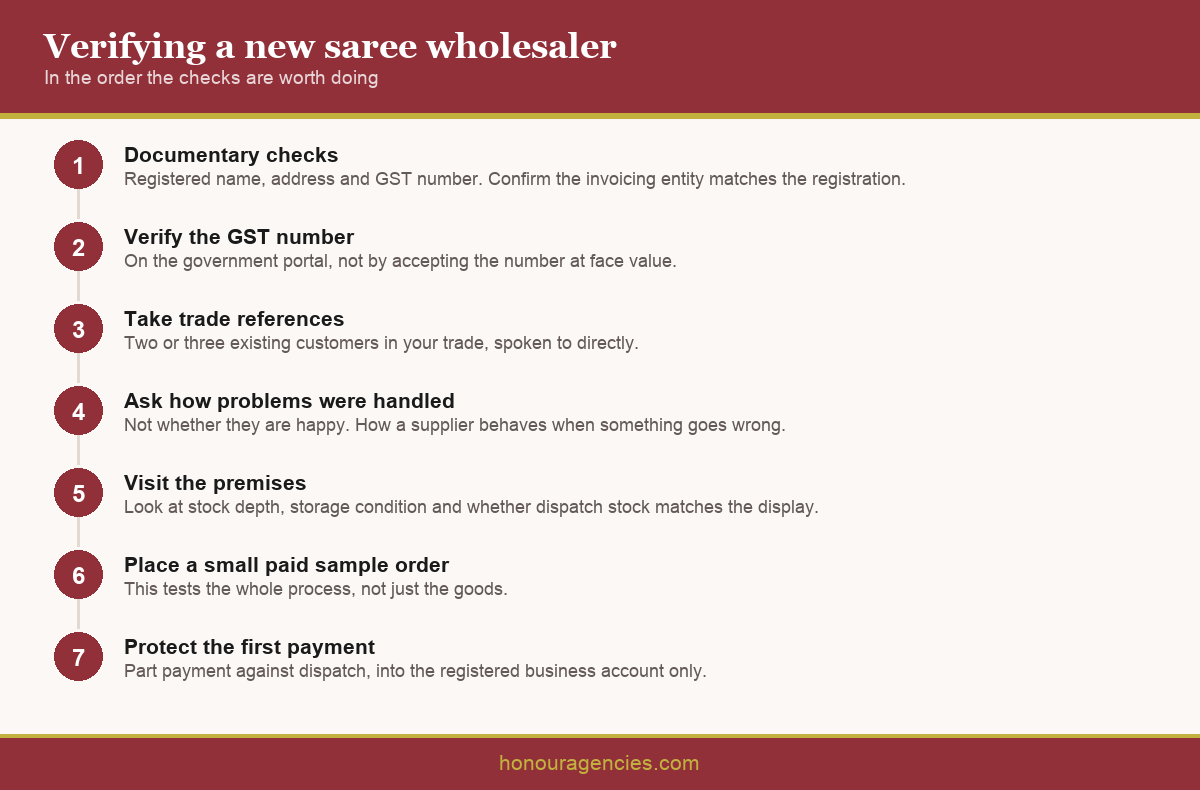
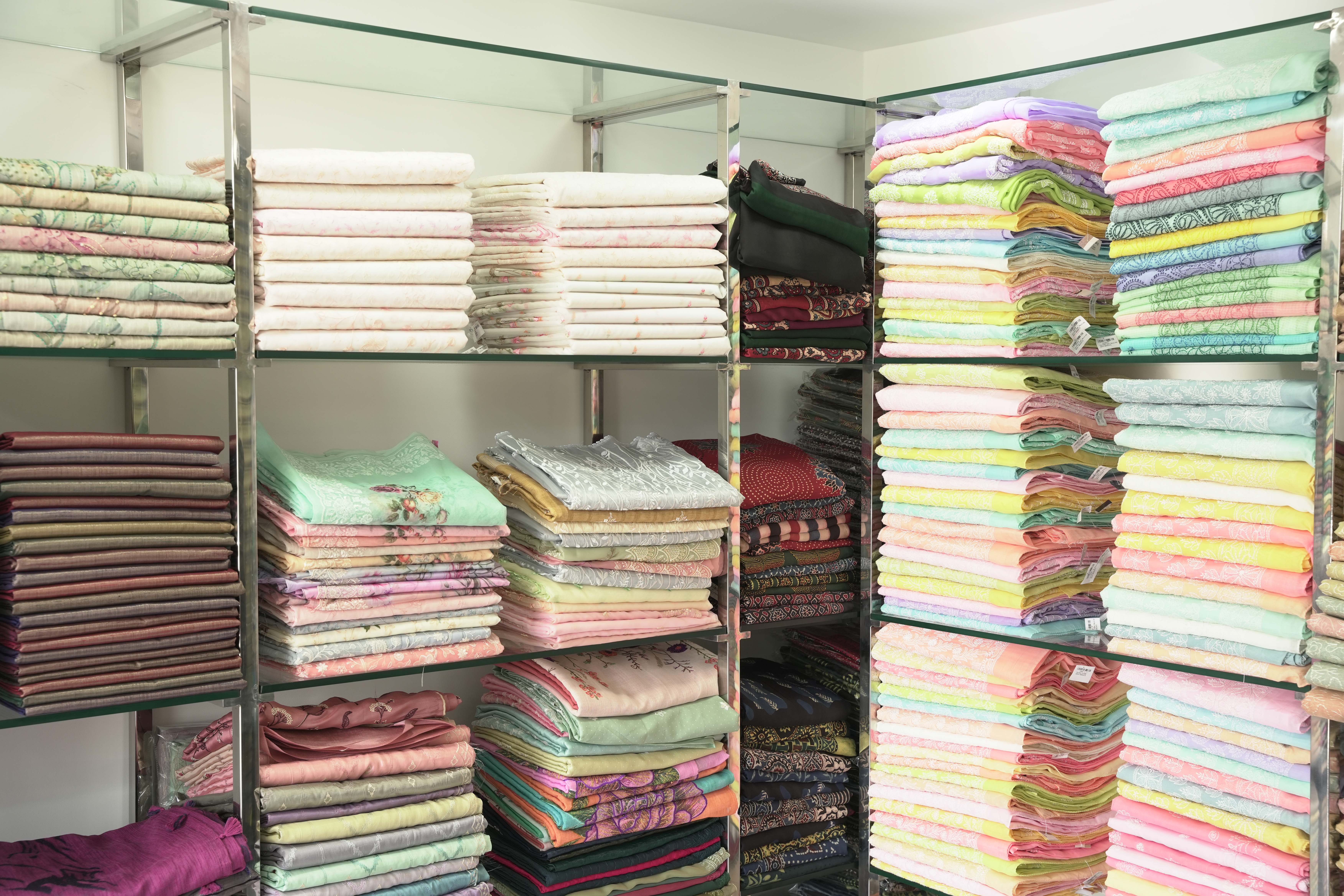
Visit if you possibly can, unannounced where that is reasonable, and look at stock depth rather than display. A wholesaler with genuine depth across sizes, shades and qualities is operating at the scale they claim, while an impressive front room with nothing behind it is a warning.
Look at how stock is stored. Rolls off the floor, protected from light and damp, organised by lot, and cartons labelled clearly all indicate a business that will handle your goods properly. Poor storage produces damaged stock regardless of how good the buying was.
Ask to see the goods you would actually buy rather than the display pieces. The difference between showroom stock and dispatch stock is one of the more common disappointments in the trade, and it is easy to check in person.
Ask about capacity while you are there. A supplier who is comfortable telling you what they cannot do, which quantities are too small or which lead times are unrealistic, is usually more reliable than one who agrees to everything. Overcommitment is a more common cause of failed first orders than dishonesty is.
Watch the operation for a while. Other customers being served, orders being packed and staff who know the stock are all signs of a working business. An empty premises during trading hours deserves a question.
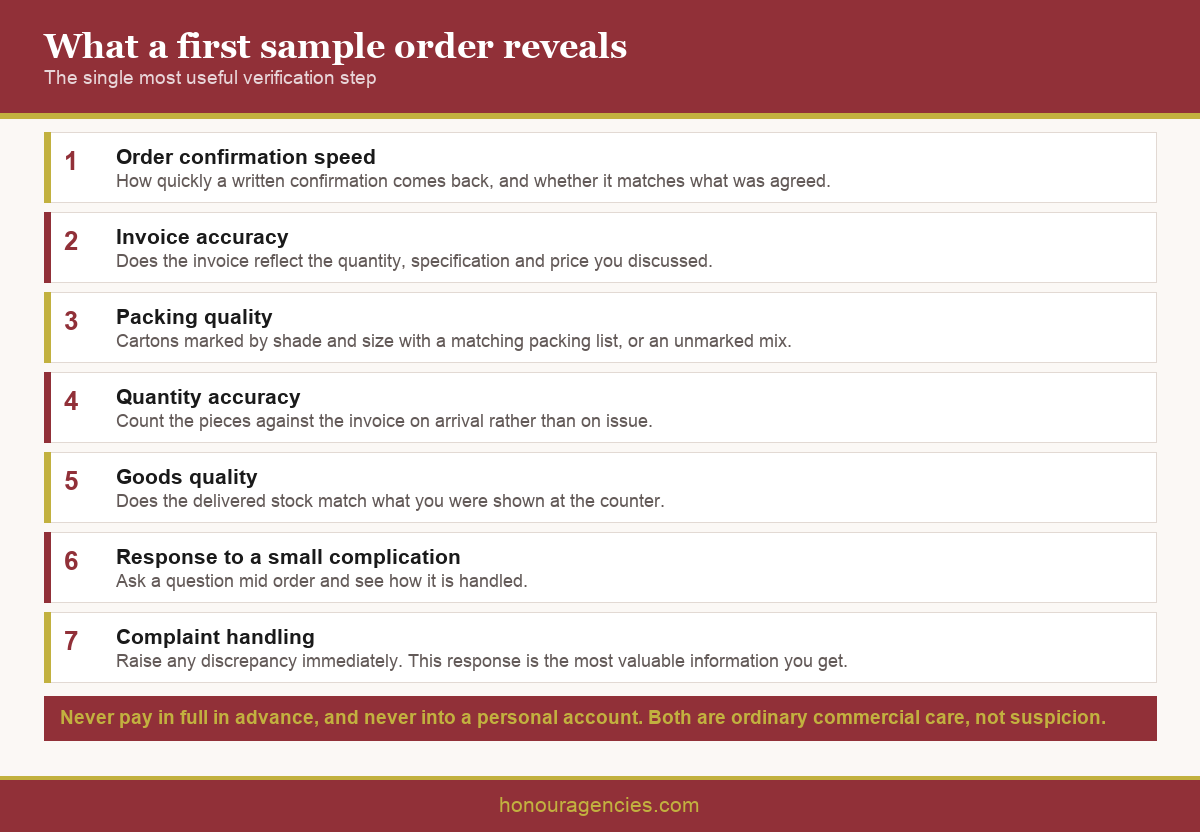
This is the single most useful verification step. Place a small paid order, not a request for free samples, and treat it as a test of the entire process rather than of the goods alone.
Watch the whole sequence. How quickly the order is confirmed, whether the invoice matches what was agreed, how the goods are packed, whether the quantity is correct, whether the quality matches what you were shown, and how long it all took.
Introduce one small complication deliberately. Ask a question mid order, or request a minor change, and see how it is handled. A supplier's response to a small inconvenience predicts their response to a large one.
Inspect on arrival properly. Count the pieces, check them against the invoice, verify the quality against what you were shown and note anything wrong. Then raise any discrepancy immediately and see what happens, because that response is the most valuable information the exercise produces. Our note on auditing a supplier's factory covers a parallel process for manufacturers.
Never pay the full amount in advance on a first order with an unverified supplier. A part payment with the balance against dispatch or delivery is normal practice and protects both sides.
Pay through traceable channels into the registered business account, not into a personal account. A request to pay an individual rather than the business is a serious warning sign and should stop the transaction.
Get all of the commercial terms in writing before paying anything at all. Quantity, specification, price, delivery date, freight responsibility and what happens if goods are rejected. A short written confirmation prevents almost every dispute that first orders generate.
Agree how disputes will be handled before you need to. Knowing whether a supplier expects returns to be shipped back, whether they issue credit notes, and how quickly they respond to a claim turns a stressful situation into an ordinary one. Suppliers who have thought about this answer immediately, which is itself a good sign.
Start small and scale with performance. Even a supplier who passes every check should earn larger orders through delivered performance rather than through a good first impression, and a supplier worth having will understand that entirely. Retailers who assess what to check before choosing a supplier usually build up in exactly this way.
Verifying a saree wholesaler means checking registration and GST, taking trade references and asking them how problems were handled, visiting the premises to see real stock depth, placing a small paid sample order to test the whole process, and protecting the first payment. None of it is difficult and all of it is cheaper than a bad first order. Honour Agencies has supplied wholesale sarees from Ernakulam for 35 years and welcomes those questions. To discuss a first order, contact our team.
Q: What documents should I ask a new wholesaler for? A: The registered business name, address and GST registration number, plus any MSME or Udyam registration. Check that the name on the invoice matches the registered entity before sending money.
Q: How do I verify a GST number? A: Check it directly on the government portal rather than accepting it at face value. A number that does not resolve, or resolves to a different business, should stop the transaction immediately.
Q: What should I ask a trade reference? A: Not whether they are happy, but what happened the last time a delivery was late or a quality problem arose. How a supplier handles trouble predicts your experience far better than praise does.
Q: What should I look for when visiting a wholesaler? A: Stock depth rather than display, how goods are stored, whether dispatch stock matches showroom stock, and whether the premises is genuinely operating during trading hours.
Q: Should I ask for free samples? A: Place a small paid order instead. It tests the entire process, including confirmation speed, invoicing accuracy, packing, quantity and complaint handling, rather than just the goods.
Q: How much should I pay in advance on a first order? A: Not the full amount. A part payment with the balance against dispatch or delivery is normal practice and protects both parties on a relationship that has no history yet.
Q: Is it safe to pay into a personal account? A: No. Pay through traceable channels into the registered business account. A request to pay an individual rather than the business is a serious warning and should stop the transaction.
Q: What should be confirmed in writing before payment? A: Quantity, specification, price, delivery date, freight responsibility and what happens if goods are rejected. A short written confirmation prevents most first order disputes entirely.
Q: Does longevity mean a supplier is reliable? A: Not by itself, but a wholesaler trading for years under the same name in the same market has a reputation to protect, which matters when you have no relationship to rely on yet.
Q: How quickly should I increase order size? A: Gradually, as performance is delivered rather than as impressions are formed. Our guide to partnering with local suppliers covers building the relationship.




Or login with