
Women danim jacket
$249.00

Red formal dress
$129.00

Man winter blazer
$149.00$99.00
Subtotal$477

 General
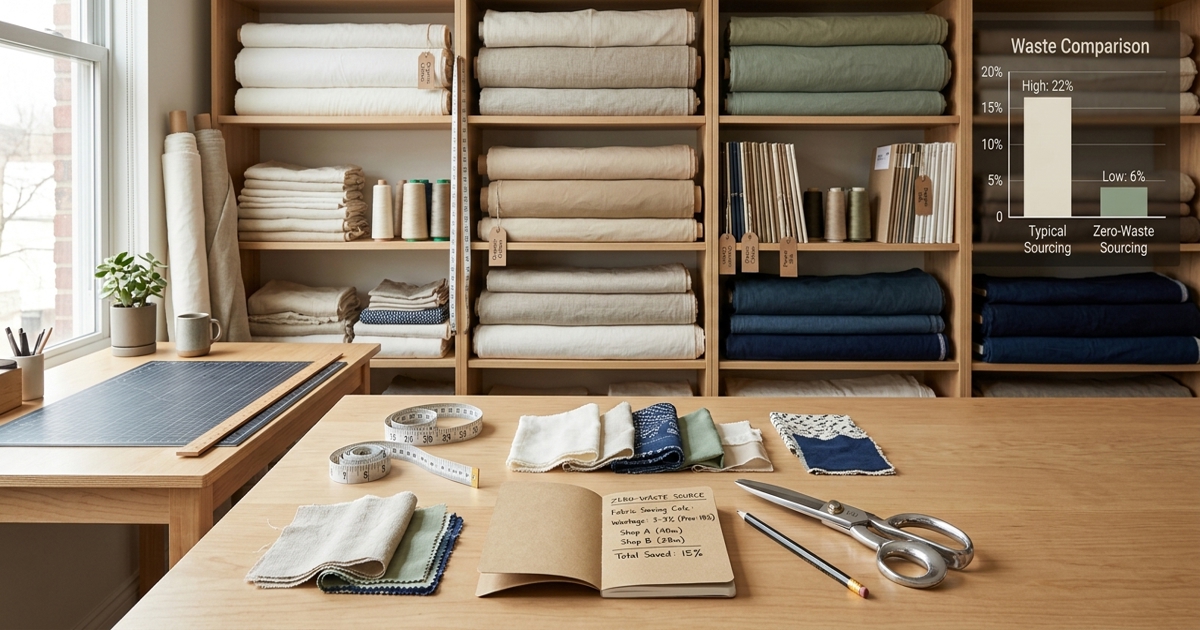
For stitching shops and independent designers, every centimetre of fabric counts. Choosing the right fabric suppliers for fashion designers is not just about getting good quality material. It is about getting the right width, the right GSM, and the right fall so that nothing ends up on the cutting room floor. This blog breaks down how smart fabric sourcing from Honour Agencies can directly cut your annual waste, reduce your cost per garment, and push more stitched pieces out of every roll you buy.
Most stitching shops compare suppliers on price per metre. That is a fair starting point, but it is an incomplete picture. The true cost of fabric includes how much of it you actually use versus how much you throw away. A roll that is 5 cm narrower than expected can force an extra seam or waste an entire panel. A fabric with poor fall may require extra interfacing, adding cost and time.
When you work with reliable fabric suppliers for fashion designers, you get consistent roll widths, predictable GSM, and fabrics that behave the way patterns demand. Over hundreds of garments, that consistency translates directly into rupees saved and orders delivered faster. This is the foundation of the zero-waste fabric challenge.
These three technical attributes are what separate a good fabric purchase from a great one. Together, they determine how efficiently a fabric performs in a stitching environment.
GSM (grams per square metre) tells you how dense and heavy a fabric is. A fabric with too high a GSM for a given pattern may add bulk at seams, requiring the tailor to trim more material away. A fabric with too low a GSM may shift during cutting, leading to misaligned panels and wasted yardage. For blouse fabrics and running materials, a GSM range of 90 to 130 is typically ideal for clean cuts with minimal fraying. Honour Agencies supplies fabrics like dyeable fabric and specialty running materials in consistent GSM ranges that reduce these variables significantly.
Standard fabric widths vary between 36 inches (90 cm) and 60 inches (150 cm). When a stitching shop orders rolls with unpredictable widths, markers have to be redrawn, panels have to be repositioned, and fabric gets wasted at the selvage edges. For a shop producing 200 garments a month, even a 3 cm width variance per metre of fabric can add up to a significant material loss annually. Sourcing plain cotton material wholesale or plain chiffon fabric wholesale from a supplier who maintains consistent width guarantees reduces this risk. Check out Honour Agencies' Kerala Running Fabric Collection for width-consistent rolls suited to high-output stitching work.
Fall refers to how a fabric drapes and flows when hung or laid flat. A fabric with excellent fall lies flat during cutting, reducing the chance of stretch distortion that makes panels come out the wrong size. Poor fall fabrics curl at the edges, slip on the cutting table, and require pinning every few centimetres. This slows down production and creates micro-waste that adds up fast. Fabrics with good fall also require less lining and underlining, which reduces material cost per garment even further.
Here is a straightforward calculation that any stitching shop owner or designer can run with their own numbers. This shows the annual savings from switching to a fabric supplier who provides consistent width, correct GSM, and excellent fall.
Assumptions for a mid-sized stitching shop:
Waste Calculation with Inconsistent Supplier:
Waste Calculation with Honour Agencies (Consistent Width + GSM):
Annual Savings: Rs. 86,400 minus Rs. 32,400 = Rs. 54,000 saved every year
This does not even account for the time saved on re-cutting, re-marking, and handling defective panels. Labour savings from faster production can easily double this figure. For larger shops producing 500 or more garments a month, the savings scale proportionally and can exceed Rs. 1.5 lakh annually.
Stitch output per metre is a productivity metric that most stitching shops never calculate but should. It measures how many finished garment pieces you can produce from a single metre of fabric when your marker efficiency is at its best. Well-selected wholesale designer fabric suppliers who offer consistent roll quality directly improve this number.
When fabric width is reliable, pattern markers can be nested tighter. When GSM is consistent, cutting speed increases because the blade does not snag or shift. When fall is good, panels stack cleanly for batch cutting. Together, these factors can improve stitch output per metre by 10 to 15 percent. For a wholesale running materials order of 500 metres, a 12 percent improvement in output means 60 extra metres worth of usable fabric with no additional spend.
This is also why sourcing floral fabric wholesale or printed running materials from a trusted distributor matters more than just finding the cheapest rate. The consistency of print placement, repeat accuracy, and fabric behaviour all affect how efficiently a designer can cut and construct garments.
Not every fabric type suits every production environment. Here is a quick guide to matching fabric type to stitching efficiency goals.
For boutiques and designers sourcing across these categories, how wholesale designer fabric suppliers help boutiques stay ahead is an important read that covers selection strategy in more detail.
Beyond sourcing from reliable fabric suppliers for fashion designers, here are practical steps every stitching shop can implement today.
For those sourcing wholesale designer fabrics online, always request swatches before bulk ordering. A swatch check for GSM, shrinkage, and width variance takes ten minutes and can prevent a costly mis-order. You can explore the full range available at Honour Agencies Running Fabrics to find rolls suited to your specific stitching requirements.
With over 35 years of experience in textile distribution, Honour Agencies has built a supply chain that prioritises consistency for trade buyers. Their wholesale fabric rolls are sourced and supplied with the needs of stitching shops, boutiques, and garment units in mind. Whether you need plain cotton material wholesale for everyday production or specialty fabrics for occasion wear, the range covers both volume and variety.
The business also supports online ordering, which means stitching shops across India can access wholesale designer fabrics online without the limitations of geography. Bulk pricing, consistent roll quality, and a catalogue that spans cotton, silk, printed, and woven fabrics make Honour Agencies a practical one-stop source for fabric procurement. According to Fibre2Fashion, consistent fabric quality at the sourcing stage is one of the top three factors that determine garment unit profitability, making supplier selection a strategic decision, not just a purchasing one.
The zero-waste fabric challenge is not a theoretical idea. It is a measurable, actionable strategy that any stitching shop or designer can adopt right now. By choosing fabric suppliers for fashion designers who deliver consistent GSM, reliable width, and excellent fall, you reduce cutting waste, increase stitch output per metre, and save tens of thousands of rupees annually. The savings calculator above makes it clear: the difference between an inconsistent supplier and a reliable one is not just quality. It is profitability. Explore the full fabric range at Honour Agencies or get in touch with the team to discuss your specific requirements and start your zero-waste journey today.

Or login with