
Women danim jacket
$249.00

Red formal dress
$129.00

Man winter blazer
$149.00$99.00
Subtotal$477

 Wholesale Sarees
Retailers outside Kerala frequently treat set saree and set mundu as the same product, and customers inside Kerala never do. The two garments share a colour language and a cultural context but differ in construction, in how they are worn and in who buys them. Getting the distinction right changes how you stock, how you display and how you advise a customer. This guide explains the difference between set saree and set mundu and how to split stock between them.
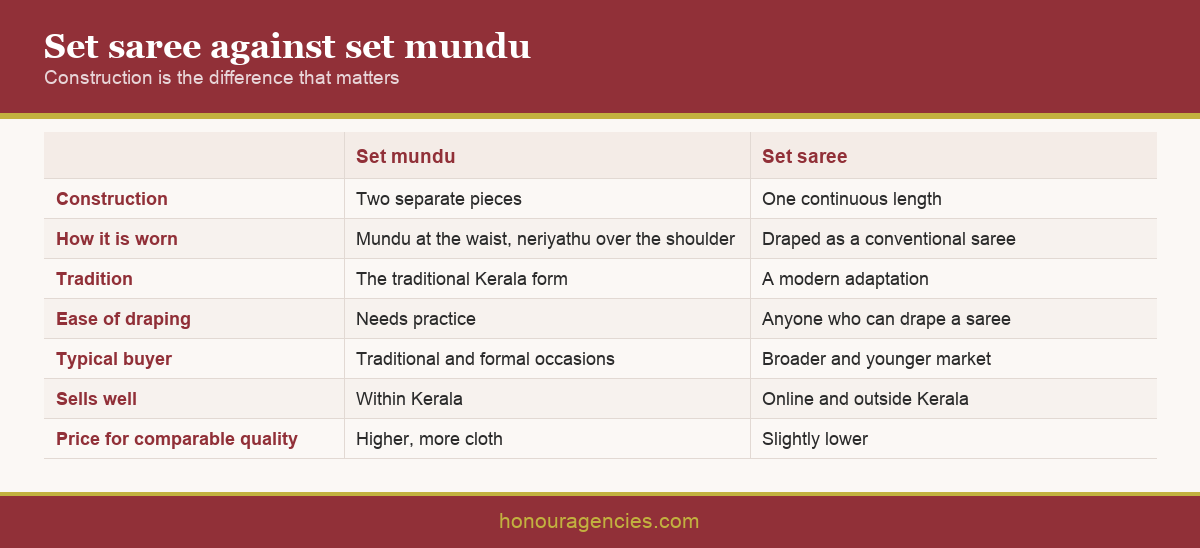
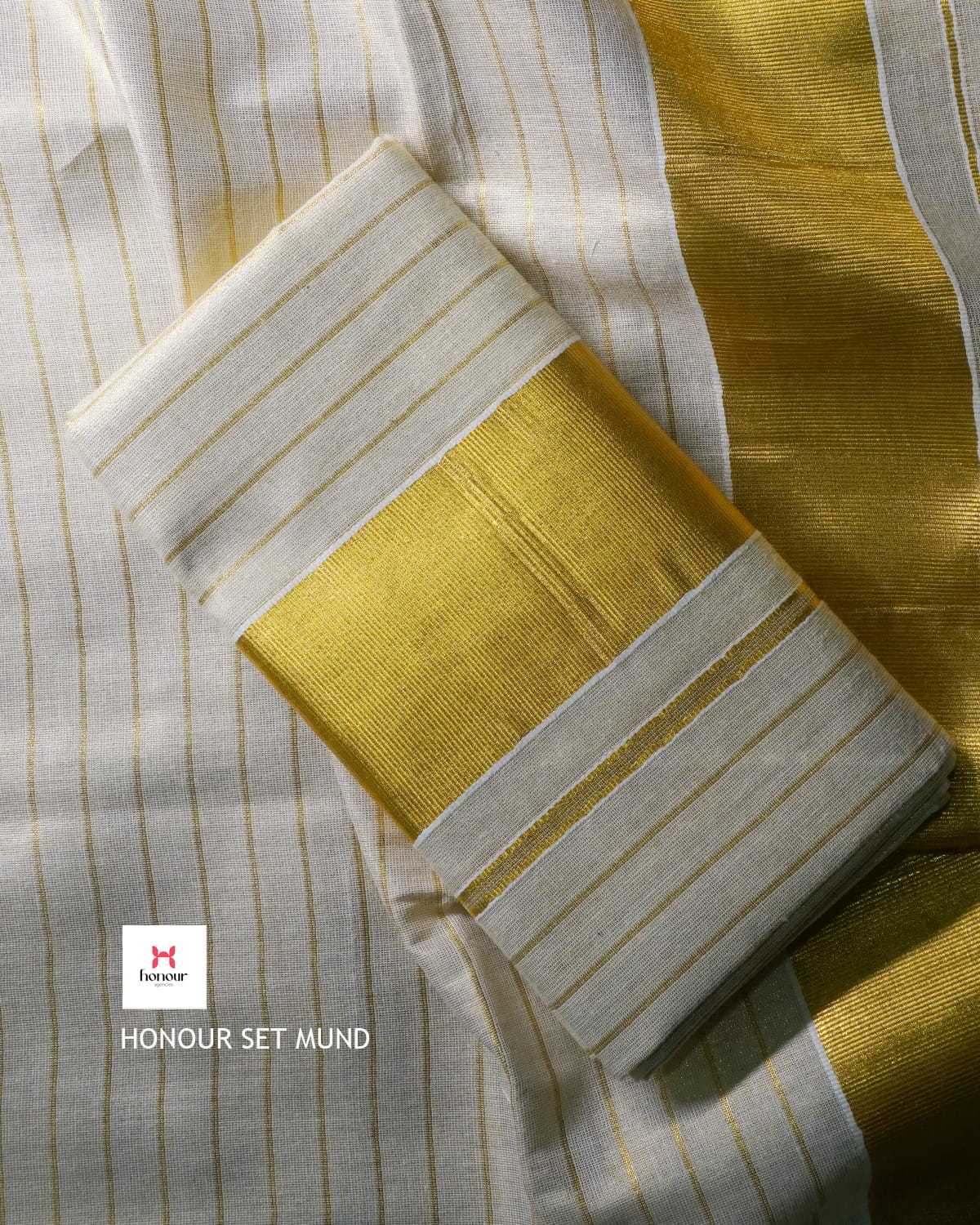
The set mundu, also called mundum neriyathum, is the traditional dress of Kerala and consists of two separate pieces of cloth. The lower piece, the mundu, is wrapped around the waist, and the upper piece, the neriyathu, is draped over the blouse and across the shoulder.
The construction is the defining difference. Because there are two pieces, the garment can be adjusted independently at the waist and the shoulder, and it sits differently on the body from a single draped length. The tradition is documented as mundum neriyathum.
The visual signature is a cream or off white cotton ground with a gold kasavu border, though coloured borders have become common in contemporary versions. That combination is what customers recognise instantly as Kerala.
Sizing works differently too, and it is worth understanding before advising a customer. The mundu is sized by length and by the number of times it wraps, while the neriyathu is judged on how far it falls over the shoulder. Neither adjusts the way a single saree length does, so a piece that suits one wearer may genuinely not suit another.
Its customer base skews towards older wearers, towards formal and religious occasions, and towards those who value the traditional form specifically. It is worn heavily at Onam, Vishu and temple functions, and increasingly as a deliberate cultural choice by younger wearers too.
The set saree takes the same visual language, the cream ground and the kasavu border, and applies it to a single continuous length draped as a conventional saree. It is a modern adaptation rather than a traditional form.
The practical advantage is familiarity. Anyone who can drape a saree can wear a set saree, while a set mundu requires knowing how to wear a two piece garment. For customers outside Kerala, or younger customers less practised in the traditional form, that difference decides the purchase.
It also travels better as a product. A set saree can be sold to a customer anywhere in India or abroad who wants the Kerala look without needing instruction, which is why it dominates online and export sales in this category.
The set saree also lends itself to variation in a way the traditional form resists. Coloured borders, contemporary motifs and lighter grounds are all readily accepted in a set saree, while customers buying a set mundu usually want the traditional treatment. That difference should shape which designs you stock in which form.
Price positioning is usually a little lower for comparable quality, since a single length uses less cloth than two pieces and involves simpler finishing. That makes it a natural entry point into the category. Our overview of Kerala set sarees covers the style in more detail.
Kasavu is the first thing to check and the least understood. Traditional kasavu uses real gold or silver coated thread, while most commercial production uses a copper or synthetic zari that looks similar and costs a fraction. Both are legitimate, and the difference must be described accurately.
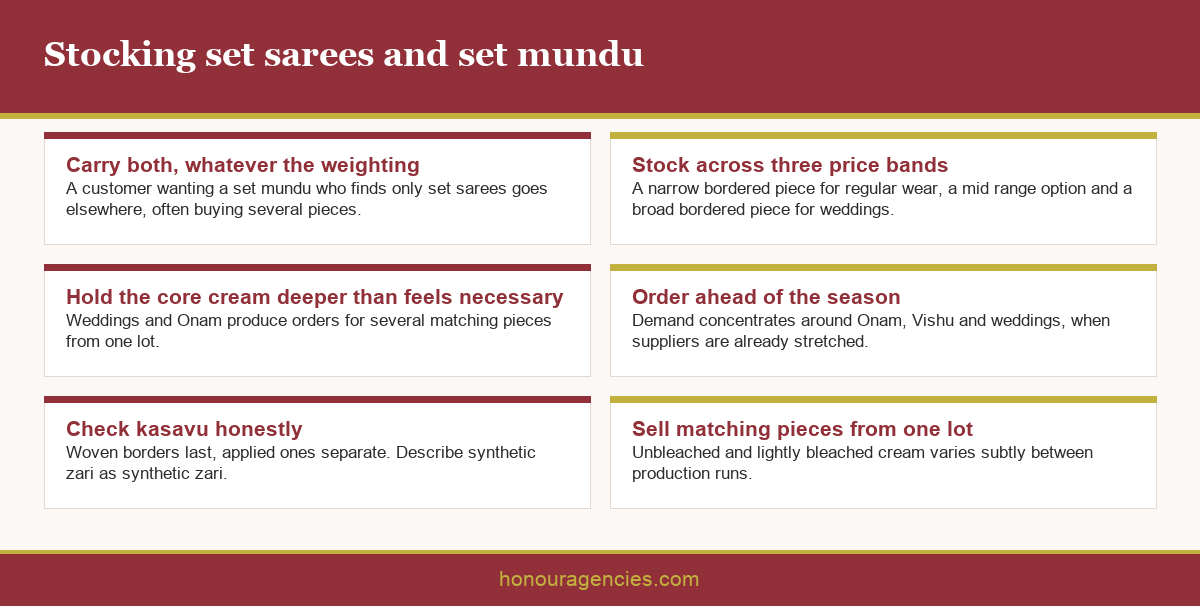
Test the border rather than admiring it. Rub the zari gently and look for the coating lifting, and check whether the border is woven into the cloth or applied separately. A woven border lasts, an applied one can separate over time.
Judge the ground cotton on its own terms. A fine, evenly woven cream cotton with good body is the mark of a quality piece, while a thin, loosely woven ground looks acceptable folded and disappointing worn. Hold it up to the light and look at the evenness.
Check the cream itself. Genuine unbleached and lightly bleached cotton varies subtly, and pieces from different lots will not match exactly. Where a customer wants two matching pieces, sell them from the same lot rather than assuming any two cream sarees will agree. Our guide to kasavu wholesale sourcing covers verifying quality claims.
Weight the split towards your actual customer base. A shop serving a Kerala community with a strong traditional following should carry set mundu in genuine depth, while one serving a broader or younger market will sell more set sarees.
Carry both regardless of the weighting. The customer who wants a set mundu and finds only set sarees will go elsewhere, and that customer is often buying for a family occasion and buying several pieces at once.
Think about family and group buying, which is a real pattern in this category. Weddings and Onam frequently produce orders for several matching pieces at once, and a shop able to supply six from one lot has an advantage over one able to supply two. Holding a little more depth in the core cream than seems necessary usually pays for itself in exactly those sales.
Stock across price bands in both forms. A simple narrow bordered piece for regular wear, a mid range option and a broad bordered piece for weddings and major functions covers most of the demand in either category.
Time the buying to the calendar. Demand concentrates sharply around Onam, Vishu and the wedding season, and stock has to be on the shelf well before those windows rather than ordered into them when suppliers are already stretched.
Describe the products accurately at the point of sale, using the correct name for each. A customer who buys a set saree believing it is a set mundu will be disappointed when they unfold a single length, and that conversation is easy to avoid with one clear sentence.
Be prepared to explain the draping difference. Staff who can show how a set mundu is worn convert customers who are interested but unpractised, and that competence is a genuine differentiator in a shop.
Sell the matching blouse piece alongside in both cases. The blouse is part of the finished look, and a customer who has to source it elsewhere is a customer who may buy the whole outfit elsewhere next time.
Be honest about zari. Telling a customer plainly that a border is synthetic zari at a synthetic zari price builds trust, while allowing them to assume it is real gold thread creates a problem that surfaces later. Retailers stocking Kerala kasavu ranges apply the same discipline across the category.
The difference between set saree and set mundu is construction, and it decides who buys which. A set mundu is two pieces worn traditionally, a set saree is a single draped length in the same visual language. Carry both, weight the split to your customers, check kasavu and ground quality rather than the overall impression, and stock ahead of Onam and the wedding season. Honour Agencies has supplied wholesale Kerala sarees from Ernakulam for 35 years. To discuss a requirement, contact our team.
Q: What is the difference between a set saree and a set mundu? A: A set mundu is two separate pieces, a lower cloth wrapped at the waist and an upper cloth draped over the shoulder. A set saree is a single continuous length draped as a conventional saree.
Q: Which is the traditional Kerala garment? A: The set mundu, also called mundum neriyathum. The set saree is a modern adaptation that applies the same cream ground and kasavu border to a single draped length.
Q: Which is easier for customers to wear? A: The set saree, because anyone who can drape a saree can wear one. A set mundu requires knowing how to manage a two piece garment, which decides many purchases for younger buyers.
Q: Which sells better outside Kerala? A: The set saree, generally. It delivers the Kerala look without requiring instruction, which is why it dominates online and export sales in this category.
Q: What is kasavu? A: The gold border characteristic of Kerala cotton garments. Traditional kasavu uses gold or silver coated thread, while most commercial production uses copper or synthetic zari that looks similar at far lower cost.
Q: How do I check zari quality? A: Rub the border gently and look for the coating lifting, and check whether the border is woven into the cloth or applied separately. Woven borders last, applied ones can separate over time.
Q: Do two cream sarees always match? A: No. Unbleached and lightly bleached cotton varies subtly between lots. Where a customer needs matching pieces, sell them from the same lot rather than assuming any two will agree.
Q: Should a shop stock both forms? A: Yes, whatever the weighting. A customer wanting a set mundu who finds only set sarees will go elsewhere, and that customer is frequently buying several pieces for a family occasion.
Q: When should this stock be ordered? A: Well ahead of Onam, Vishu and the wedding season. Demand concentrates sharply around those windows, and ordering into them means competing for capacity with much larger buyers.
Q: How should staff describe these products? A: Plainly and accurately, including whether zari is real or synthetic. Our set mundu guide covers the traditional form in more depth.

Or login with