
Women danim jacket
$249.00

Red formal dress
$129.00

Man winter blazer
$149.00$99.00
Subtotal$477

 General
Chiffon is the most demanding fabric on most wholesale shelves. It is sheer, it slips, it snags, and it shows every fault a heavier cloth would hide. It is also one of the best selling fabrics in the Indian saree and dupatta trade, which means anyone buying plain chiffon fabric wholesale has to get the handling right rather than avoid the product. This guide covers what separates chiffon from georgette, how the grades differ, and how to buy, cut and store it without losing the margin to wastage.
Both fabrics are woven from highly twisted yarns, and both are technically crepes, so the confusion between them is understandable. The practical differences are consistent enough to be useful. Chiffon is lighter, sheerer and smoother to the touch, with a soft fluid drape and a faint shimmer.
Georgette is heavier, more opaque and grainier, with a springier handle that recovers better from crushing. Hold both and the difference is immediate. Chiffon slides through the fingers, georgette pushes back slightly.
That difference decides where each belongs. Chiffon suits dupattas, layered sarees, overlays and anything meant to float, while georgette suits sarees and garments intended to be worn with more structure and less lining.
Price separates them in practice as well. Because chiffon is lighter, a metre contains less fibre than the same width of georgette, which pulls the rate down while the handling cost pushes the real cost back up. Comparing the two on rate alone therefore tells you very little about which will be more profitable in a given garment.
Durability separates them too. Chiffon snags more easily, frays faster at cut edges and shows pulls that georgette would absorb. It is not a fragile fabric when handled properly, but it is unforgiving of careless handling in a way georgette is not.
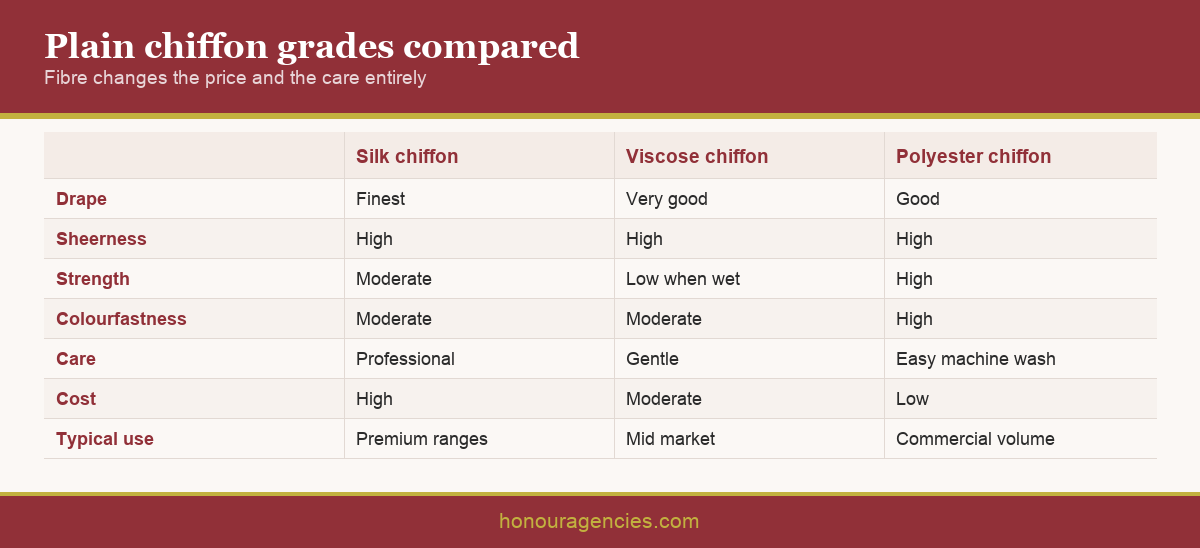
Fibre first. Silk chiffon is the original and still the finest, with a drape and a subtle lustre nothing else matches, at a price and a care requirement that limits it to premium ranges. Polyester chiffon dominates commercial volume because it is strong, colourfast, cheap and easy to launder.
Viscose and blended chiffons sit in between, handling closer to silk than polyester at a moderate price, with lower wet strength and a shorter wash life. For many retailers this is the practical middle of the range.
Weight is quoted in grams per square metre and runs low, commonly between 30 and 60 GSM. Lighter cloth floats more and shows more, heavier cloth holds a little more structure and covers better. The band you choose should follow the end product rather than a preference.
Finish is the other variable to ask about. Some chiffons carry a light softening or a surface treatment that flatters the sample and washes away, leaving a cloth that feels noticeably harsher than the one you approved. If a sample feels better than expected for its price, ask what has been applied and whether it is permanent.
Opacity does not track weight perfectly, because twist and weave density affect it independently. Hold a sample over a printed page and judge it directly, because the number on a quotation will not tell you whether a customer will want a lining.
Chiffon moves under the scissors, which is where most of the loss happens. The cloth slips against itself and against the table, so a stack cut without preparation produces panels that do not match. Anyone costing a garment in chiffon should allow more wastage than for a stable cotton.
Simple discipline solves most of it. Cut single ply rather than stacked where the design allows, use a tissue or paper layer under the cloth, weight the fabric rather than pinning through it, and use sharp shears or a rotary blade rather than a worn pair.
Edges fray quickly, so plan the finishing before the cutting. A rolled hem, a French seam or an overlocked edge each need a different seam allowance, and deciding afterwards means recutting or accepting a narrower garment.
Bias behaviour deserves respect. Chiffon stretches readily off grain, and a panel cut carelessly will hang unevenly once the garment is made up. Mark and cut on grain deliberately, and let cut pieces relax before sewing rather than working them immediately.
Unroll a length and look across the full width in good light. Sheer cloth shows side to centre dye variation far more readily than heavier fabric, and a garment cut from the selvedge side can differ visibly from one cut from the centre.
Check the selvedge itself. A tight or puckered selvedge pulls the edge of the roll out of shape, and that distortion carries several inches into the usable width. It is obvious on a flat length and invisible on a folded sample.
Wash a sample before committing to a large quantity. Check the ground for shrinkage, look for any colour loss, and see whether the handle survives the process. Polyester chiffon is generally stable, but viscose and blended cloth can change noticeably after one wash, and it is far better to know that before the stock is on the shelf.
Look for pulls, holes and machinery marks. On a sheer cloth these are conspicuous in the finished garment, and they are far cheaper to find on a roll than after cutting. Inspect a proportion of rolls rather than accepting on documents alone.
Approve a physical swatch, sign and date it, and require the wholesale fabric supplier to hold the matching piece against your account. Then check a cutting from every new lot before the full quantity ships, since pale sheer shades show lot differences clearly. Our note on ensuring quality when buying wholesale covers the same discipline applied to finished goods.
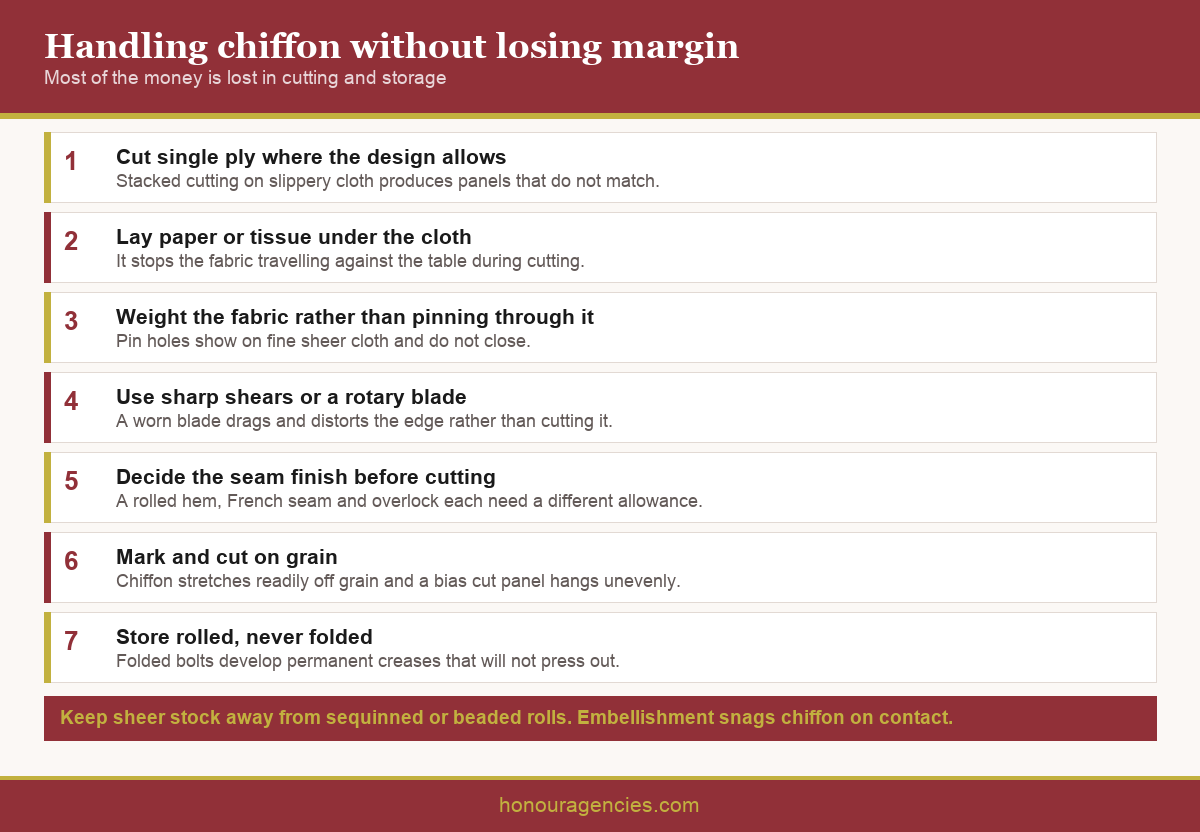
Store chiffon rolled, never folded. A folded bolt develops permanent creases along the fold lines, and on a fine sheer cloth those lines do not press out. This single habit protects more value than any negotiation on the rate.
Keep it away from rough surfaces and from anything embellished. Sequinned and beaded stock snags chiffon on contact, so those rolls should be wrapped and stored apart rather than stacked together.
Protect pale shades from light. Fine cloth yellows unevenly where daylight reaches it, so a roll stored near a window develops a visible band across its outer layers. Cover stock or store it away from windows.
Rotate by age with a date label and a first in first out rule. Chiffon holds its condition well when stored correctly, but stock left at the back for two seasons accumulates handling marks and light damage that make it hard to sell at full value. Retailers stocking fancy sarees usually apply the same rotation to their sheer ranges.
Plain chiffon fabric wholesale is a handling business more than a buying one. Know how chiffon differs from georgette, choose the fibre and weight against the end product, test opacity yourself, cut single ply with paper and sharp blades, and store rolled and protected from light and snags. Do that and chiffon is a reliable, high selling line rather than a source of quiet losses. Honour Agencies has supplied wholesale fabrics and sarees from Ernakulam for 35 years. To discuss a chiffon requirement, contact our team.
Q: What is the difference between chiffon and georgette? A: Both are crepe constructions, but chiffon is lighter, sheerer and smoother with a fluid drape and faint shimmer. Georgette is heavier, grainier and more opaque, with a springier handle that recovers better from crushing.
Q: Which chiffon is best for commercial ranges? A: Polyester chiffon dominates volume because it is strong, colourfast, economical and easy to launder. Viscose blends handle closer to silk at moderate cost, while silk chiffon suits premium lines only.
Q: What weight is plain chiffon usually? A: Commonly between 30 and 60 grams per square metre. Lighter cloth floats more and shows more, while the heavier end holds a little more structure and covers better without losing the drape.
Q: Why does chiffon waste so much in cutting? A: The cloth slips against itself and the table, so stacked cutting produces panels that do not match. Cut single ply where possible, use a paper underlay, weight rather than pin, and keep blades sharp.
Q: How should chiffon edges be finished? A: Decide before cutting, because a rolled hem, French seam and overlocked edge each need a different seam allowance. Chiffon frays quickly, so choosing the finish afterwards means recutting or losing width.
Q: Does chiffon stretch? A: Readily off grain. A panel cut carelessly on the bias will hang unevenly once made up, so mark and cut on grain deliberately and let pieces relax before sewing rather than working them immediately.
Q: How should chiffon be stored? A: Rolled, never folded, away from direct light and separated from embellished stock. Folded bolts develop permanent creases that will not press out of a fine sheer cloth.
Q: Why does chiffon shade vary across the roll? A: Sheer cloth shows side to centre dye variation far more readily than heavier fabric. Unroll a length and check the full width in good light rather than judging from a folded corner.
Q: Does chiffon always need a lining? A: Often, depending on the weight and the garment. Hold a sample over a printed page to judge opacity directly, since the quoted GSM alone will not tell you what a customer will see.
Q: How much stock should be held in chiffon? A: Enough of each shade to cut full garments, rotated by age. Our guide to sourcing premium fabrics covers stock planning for delicate cloth.




Or login with