
Women danim jacket
$249.00

Red formal dress
$129.00

Man winter blazer
$149.00$99.00
Subtotal$477

 Wholesale Sarees
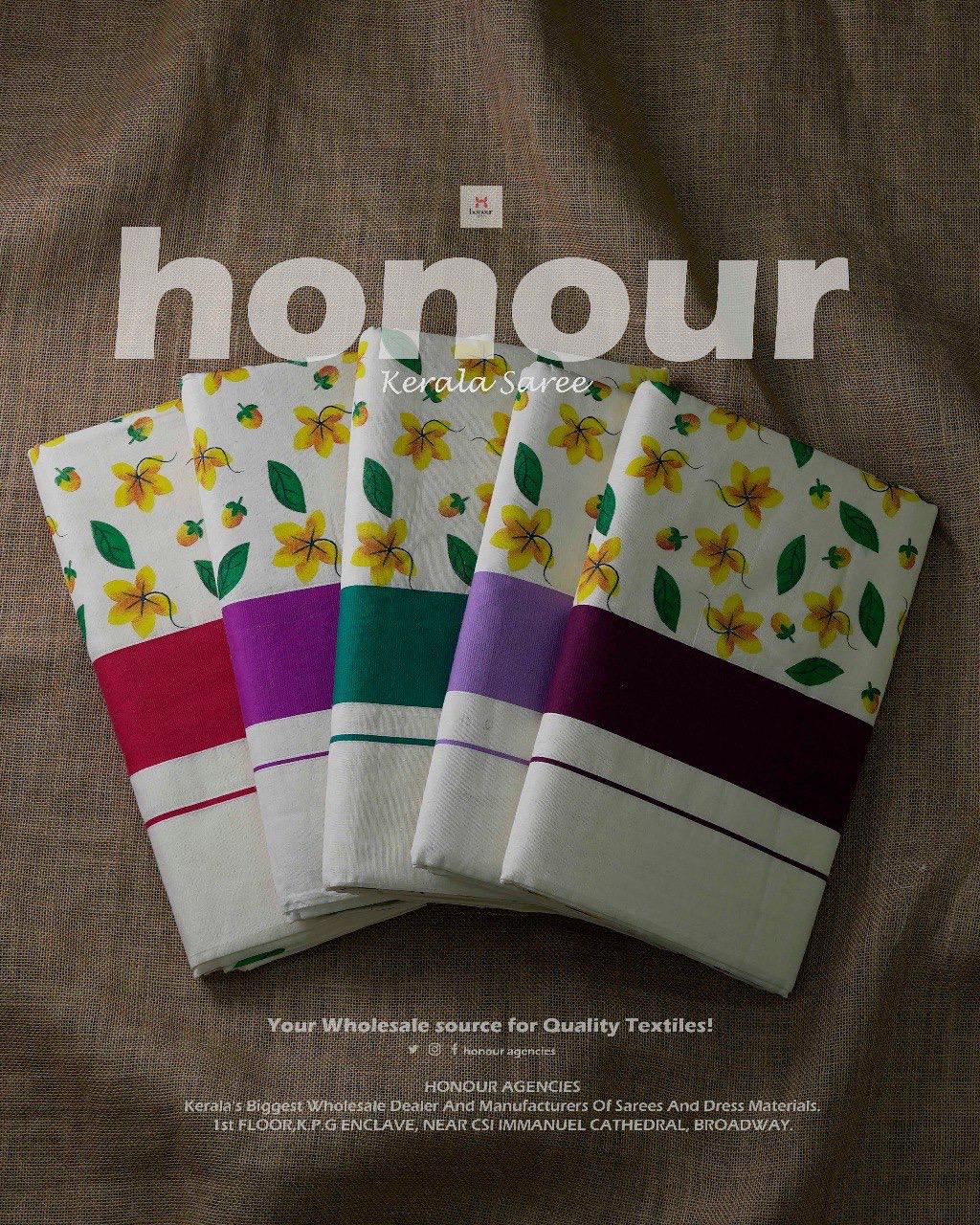
Hand painted Kerala cotton sarees occupy a valuable niche. They carry the recognisable cream and gold base that customers associate with Kerala, and the painted work gives each piece an individuality that a printed saree cannot match. They also behave differently from every other line on the shelf, in pricing, in variation and in how they must be cared for. This guide covers what retailers need to check when buying Kerala cotton hand painted sarees wholesale, and how to sell them without generating returns.
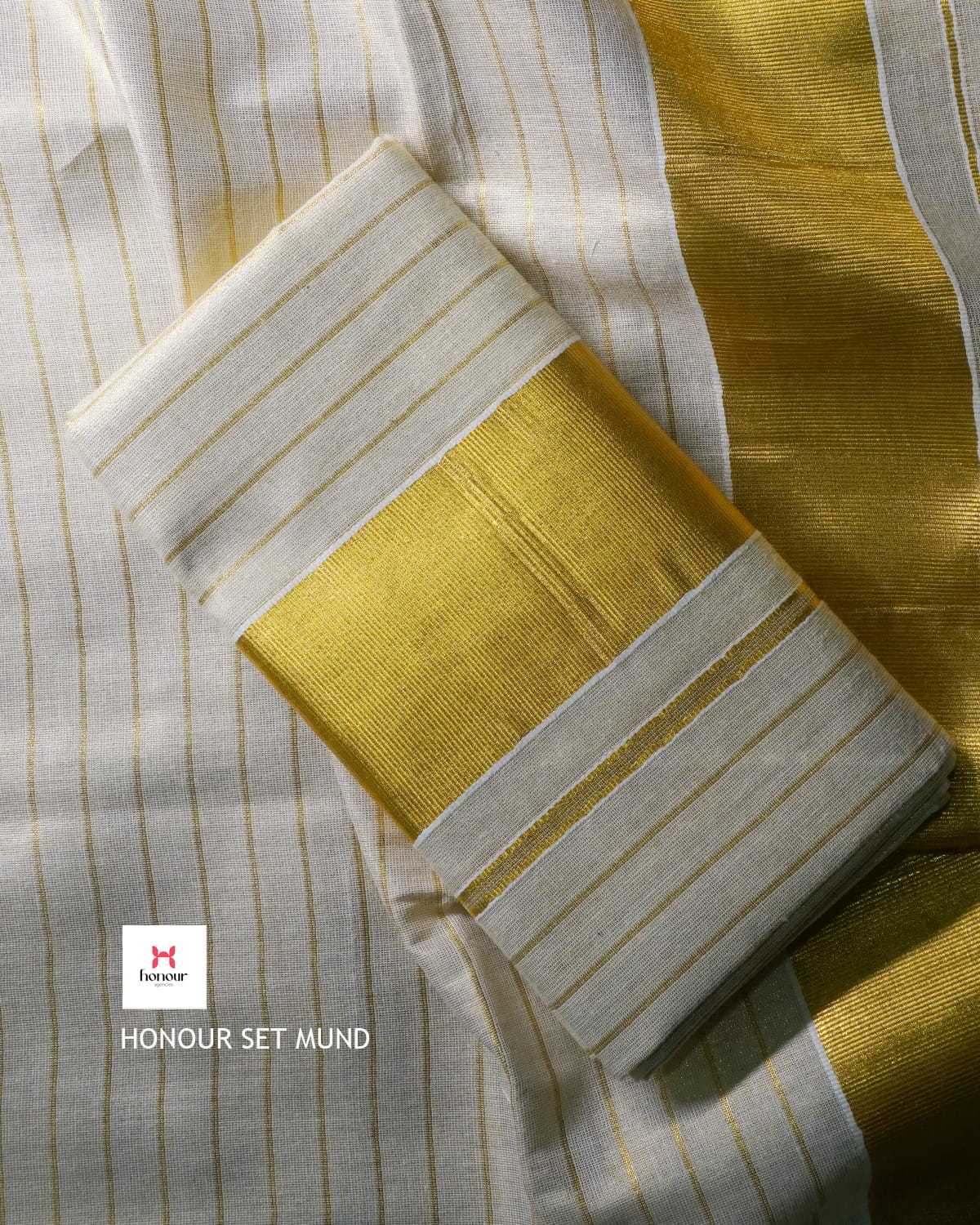
The base is usually a Kerala cotton in the traditional off white or cream ground, often with a gold or coloured border. That base is what customers recognise, and it is closely associated with the kasavu tradition even when the saree itself is a contemporary interpretation rather than a formal kasavu piece.
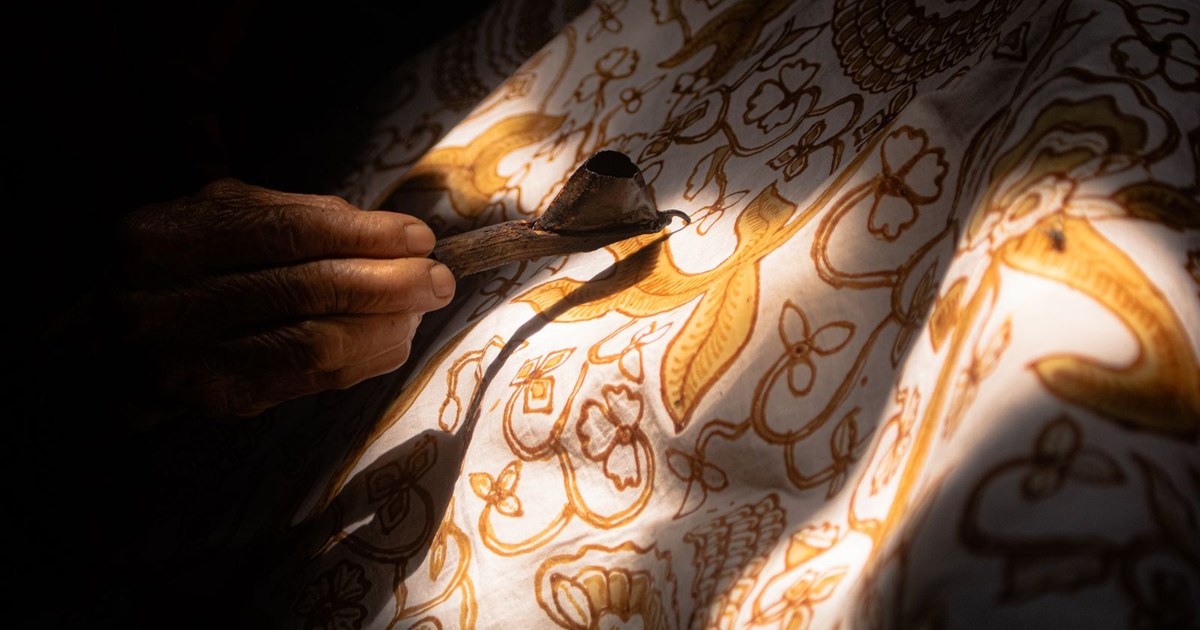
The painting is applied by hand, usually with fabric paint or dye and brushes, over a plain woven ground. Common motifs include floral sprays, temple and architectural elements, mural inspired figures drawn from Kerala's painting tradition, and simple geometric borders.
Because the work is manual, no two pieces are identical. Brush weight varies, motif placement shifts and colours differ slightly between batches. Retailers used to printed stock sometimes read this as a fault, but it is the product, and it is what customers are paying a premium for.
It also changes how the stock has to be photographed and listed. A single catalogue image cannot represent a batch where every piece differs, so shops selling these online need either to photograph each saree individually or to state clearly that the piece supplied will vary from the image. Skipping that step is the most common source of online returns in this category.
The commercial consequence is that these cannot be bought like printed sarees. There is no exact repeat, no reliable reorder of a specific piece, and no way to guarantee that a second batch matches the first. Buying decisions have to accommodate that from the start.
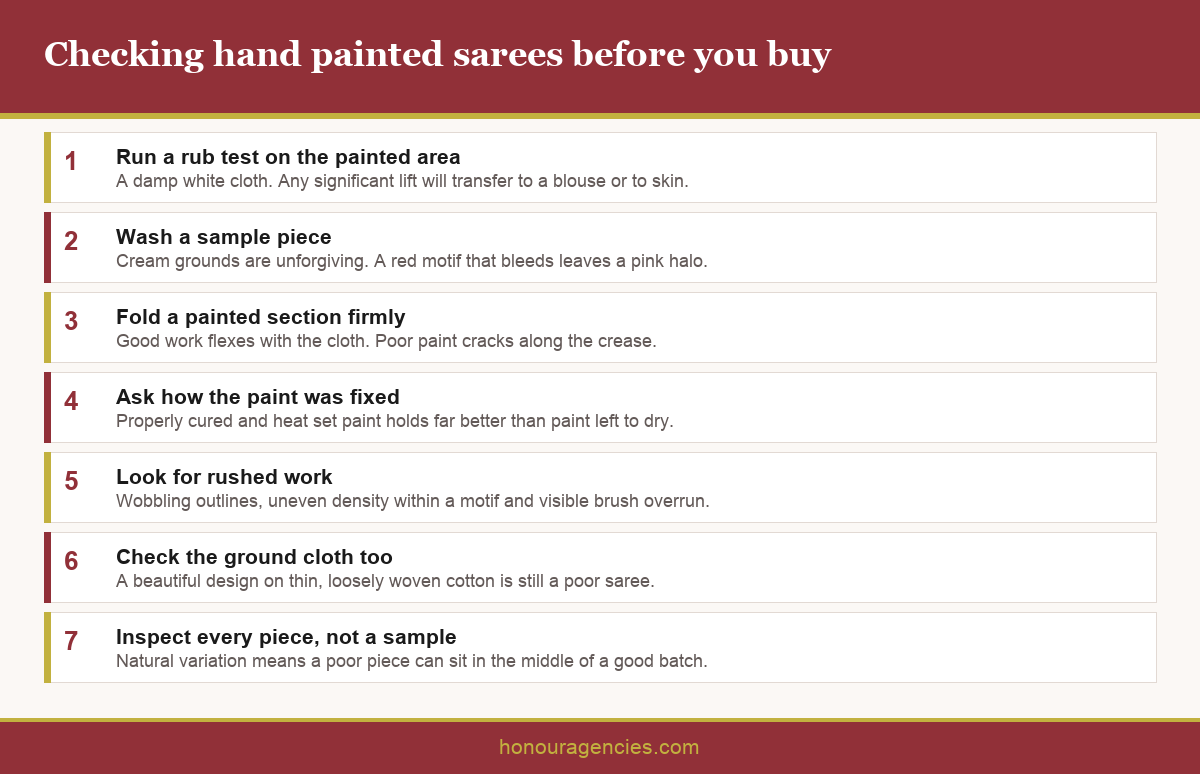
Fastness is the check that matters most. Rub a damp white cloth firmly across a painted area and look for colour transfer. Any significant lift is a warning, because what comes off on a cloth will come off on a blouse, a car seat or the customer's skin.
Wash a sample piece the way a customer realistically will. Look for the paint losing depth, colours bleeding into the cream ground, and the outlines softening. Cream grounds are unforgiving, and a red motif that bleeds even slightly produces a pink halo that cannot be removed.
Check the handle of the painted area. Good work stays reasonably soft and flexes with the cloth. Heavy or poorly cured paint sits on the surface as a stiff plate, cracks along fold lines and eventually flakes. Fold a painted section firmly and look at the crease.
Ask how the paint was fixed. Properly cured fabric paint, heat set after application, holds far better than paint that was simply allowed to dry. A supplier who can answer that question is usually one whose stock survives washing.
Set your own tolerance before you buy. Decide what range of variation you will accept in motif placement, colour depth and finish, and communicate it to the supplier as a standard rather than assuming they share your view.
Inspect every piece rather than sampling. This is the one category where piece by piece inspection is genuinely worth the time, because the variation that makes the product valuable also means a poor piece can sit in the middle of a good batch.
Look for the faults that separate skilled work from rushed work. Wobbling outlines, uneven paint density within a single motif, visible brush overrun outside the intended shape and motifs that are noticeably off centre on the pallu are all signs of speed rather than style.
Look at the border and the painting together. Painted motifs that crowd or overlap a woven gold border rarely read well, and the two elements need to have been planned as one design rather than applied independently. A saree where the painting respects the border is the mark of someone who designed the piece rather than decorated a blank.
Check the ground cloth as carefully as the painting. A beautiful design on a thin, poorly woven cotton is still a poor saree, and customers judge the whole piece. Our note on Kerala cotton sarees for retail covers what to look for in the base.
Price these separately from printed stock and explain why. Hand painted work carries real labour cost, and a customer who understands that a person painted this piece accepts a higher price readily. A customer who is not told simply compares it to a printed saree and finds it expensive.
Buy shallow across designs and deep on nothing. This inverts the normal advice, and it is correct here because every piece is already unique. Holding twenty near identical pieces defeats the individuality that justifies the price.
Accept that reordering is approximate. You can reorder a style, a motif family and a colour direction, but not a specific saree. Tell customers that at the point of sale, because it converts hesitation into a decision rather than producing a disappointed return visit.
Consider the gifting angle deliberately. A piece bought as a gift is chosen quickly and judged on presentation, so keeping a few of the strongest designs in good packaging converts noticeably better than leaving them stacked with everything else. Small changes in how the category is presented tend to move the numbers more than price does.
Plan around occasion demand. These sarees sell strongly into festival and gifting periods, particularly around Onam and Vishu, when the Kerala cream and gold association is strongest. Order well ahead of those windows rather than into them.
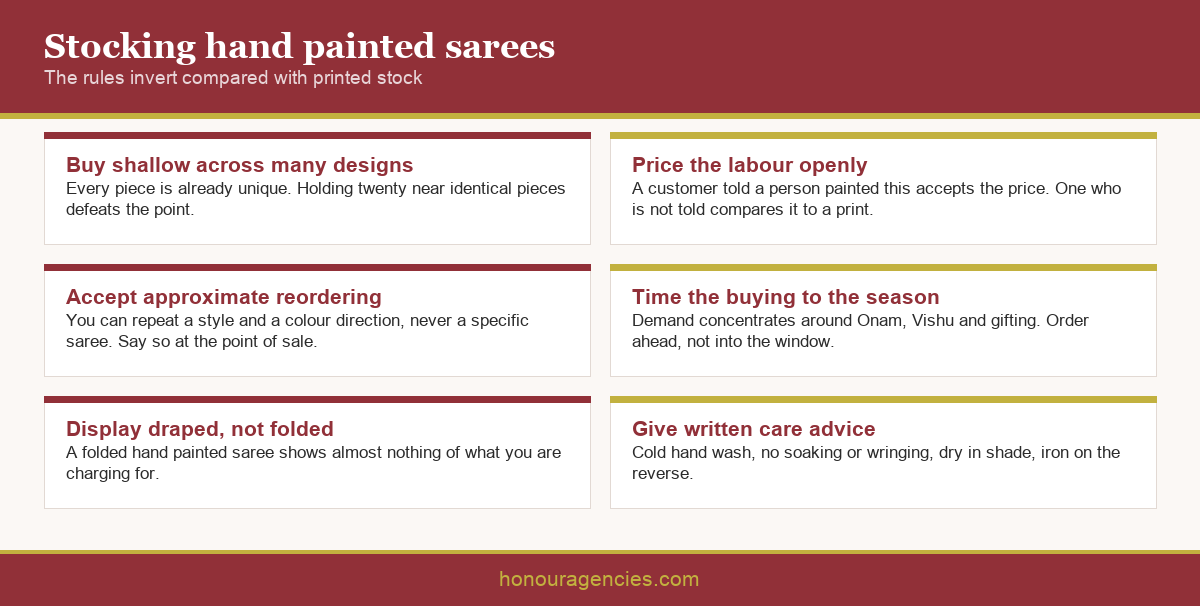
Display these differently. A hand painted saree folded on a shelf shows almost nothing, while one draped so the painted pallu is visible sells itself. Give the category space rather than filing it with printed cotton.
Tell the story briefly and accurately. Where the work was done, roughly how long a piece takes and what the motifs draw on all convert well, provided the claims are true. Overstating a saree's provenance is the fastest way to lose a customer's trust.
Give specific care advice in writing. Hand wash separately in cold water for the first few washes, no soaking, no wringing, dry in shade rather than direct sun, and iron on the reverse avoiding the painted areas. That instruction card prevents most complaints.
Set expectations about ageing honestly. Hand painted work softens over time, and a piece worn regularly will not look as it did on day one. Customers who are told that treat it as character, while customers who are not treat it as a defect. Retailers stocking kasavu ranges apply the same honesty to purity and zari claims.
Kerala cotton hand painted sarees wholesale is a category that rewards inspection and honesty rather than volume. Test paint fastness with a rub and a wash, set a variation tolerance and inspect piece by piece, buy shallow across many designs, price the labour openly and give customers written care advice. Handled that way, hand painted stock carries margin and reputation at the same time. Honour Agencies has supplied wholesale sarees from Ernakulam for 35 years. To discuss a hand painted requirement, contact our team.
Q: Why do hand painted sarees vary between pieces? A: Because the work is manual. Brush weight, motif placement and colour depth all shift slightly from piece to piece, and that individuality is exactly what customers are paying the premium for.
Q: How do I test whether the paint will last? A: Rub a damp white cloth firmly across a painted area and look for transfer, then wash a sample piece and check for loss of depth, bleeding into the ground and softening outlines.
Q: What does poor quality paint look like? A: It sits on the surface as a stiff plate rather than flexing with the cloth, cracks along fold lines and eventually flakes. Fold a painted section firmly and inspect the crease.
Q: Can hand painted designs be reordered exactly? A: No. You can reorder a style, motif family and colour direction, but never a specific piece. Tell customers this at the point of sale so hesitation turns into a decision.
Q: How should hand painted sarees be priced? A: Separately from printed stock, with the labour explained. A customer who understands that a person painted the piece accepts the price, while one who is not told compares it to a print.
Q: How much stock should I hold per design? A: Shallow across many designs rather than deep on a few. Holding twenty near identical pieces defeats the individuality that justifies the price in the first place.
Q: How should customers wash these sarees? A: Hand wash separately in cold water for the first few washes, without soaking or wringing, dry in shade rather than direct sun, and iron on the reverse avoiding painted areas.
Q: When do hand painted Kerala sarees sell best? A: Into festival and gifting seasons, particularly around Onam and Vishu when the cream and gold association is strongest. Order well ahead of those windows rather than into them.
Q: Should every piece be inspected on arrival? A: Yes. This is the one category where piece by piece inspection is worth the time, because natural variation means a poor piece can sit unnoticed in the middle of a good batch.
Q: How should these sarees be displayed? A: Draped so the painted pallu is visible, not folded on a shelf. Our guide to Kerala saree collections covers presenting regional ranges.

Or login with