
Women danim jacket
$249.00

Red formal dress
$129.00

Man winter blazer
$149.00$99.00
Subtotal$477

 General
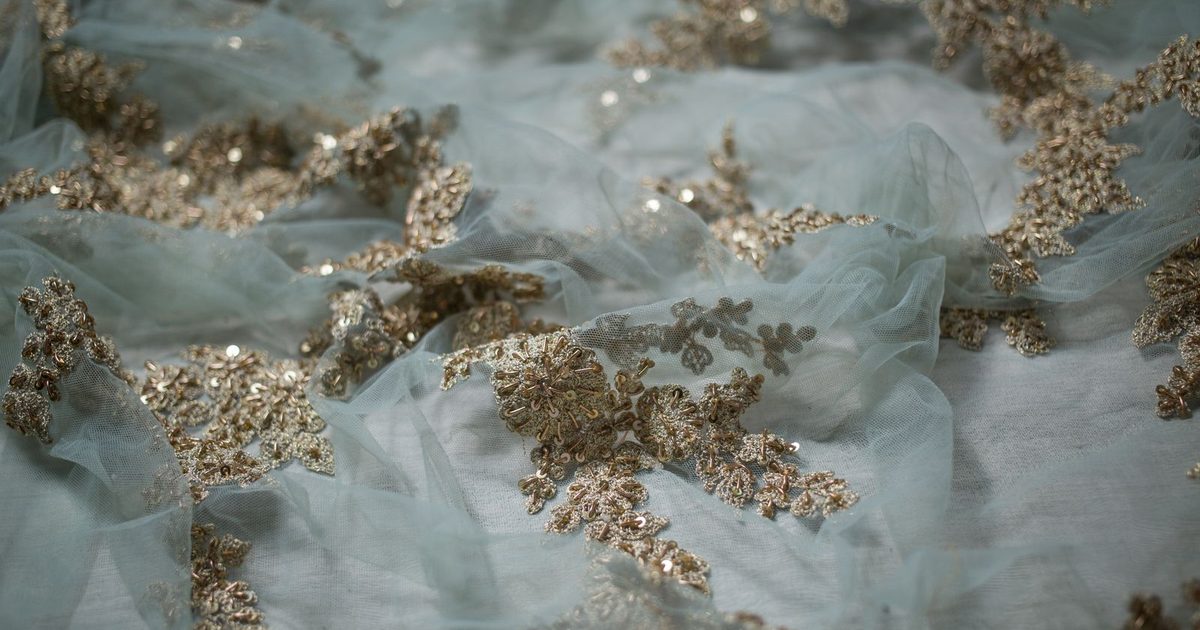
Embroidered georgette is where a boutique's margin is either made or quietly lost. The cloth is expensive, the decoration is fixed before you buy it, and a placement that does not suit your garment turns a beautiful roll into wastage. Buying embroidered georgette fabric wholesale well is less about finding the prettiest sample and more about matching the repeat, the placement and the base weight to what you actually cut. This guide covers how to do that.
Start with what sits under the thread. Georgette is a lightweight crepe of highly twisted yarns, and its springy handle is exactly what makes it drape beautifully and exactly what makes it vulnerable to distortion once stitching pulls on it.
A base too light will pucker. Dense embroidery exerts real tension on the ground fabric, and a very fine georgette gathers around each motif rather than staying flat. The result looks acceptable on a roll and disappointing once the garment hangs.
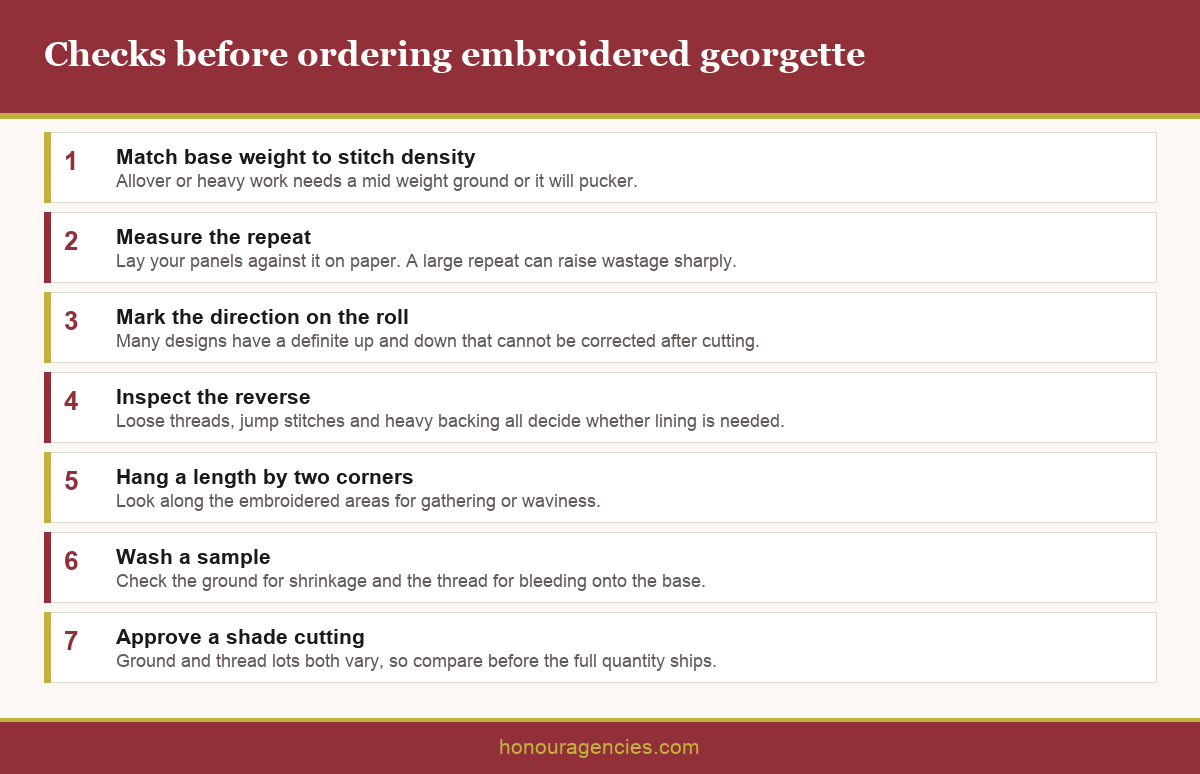
Match base weight to embroidery density. Light scattered motifs sit happily on a sheer georgette, while allover work, heavy zari or thick thread needs a mid weight ground with more body. Ask the supplier what base GSM the design was developed on rather than assuming any georgette will carry it.
Consider the lining requirement at the same time. Embroidered georgette is usually sheer enough to need a lining, and the lining fabric, its colour and its cost all belong in the garment costing rather than being discovered at the sampling stage. A change of lining colour also changes how the embroidery reads, so decide both together.
Fibre matters too. Polyester georgette is stable, colourfast and forgiving under machine embroidery, which is why it dominates commercial ranges. Viscose georgette handles more like silk and takes dye beautifully but is weaker when wet, and silk georgette carries the finest work at a price that only a premium line supports.
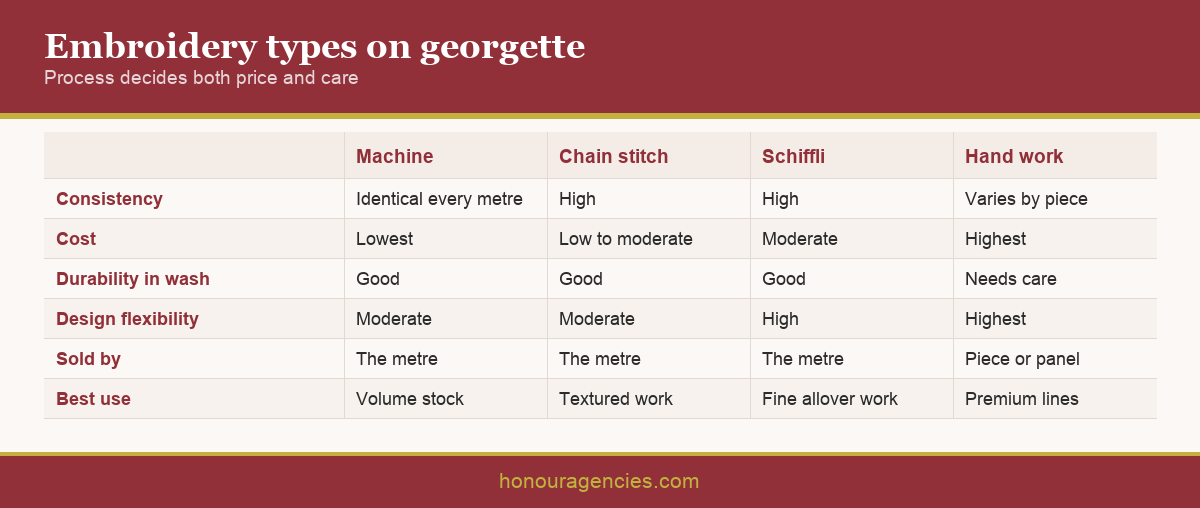
Machine embroidery covers most wholesale volume. It is consistent, repeatable and economical, and a good machine design at a sensible density looks excellent. Its limitation is that every metre is identical, which is a virtue for stock and a constraint for anything meant to feel individual.
Computerised multi head work, chain stitch and schiffli each produce a different look and a different price. Ask which process was used, because it predicts both the durability of the stitching and how the cloth will behave under a domestic wash.
Hand work, including aari and zardozi, carries a premium and a different care requirement entirely. It is rarely bought by the metre in volume, and where it is, the variation between pieces is part of what you are paying for rather than a fault to be corrected.
Embellishment beyond thread changes everything again. Sequins, beads and stones add weight, catch on other garments in storage, and often cannot survive machine washing. If a roll carries them, the care instruction and the packing method both need to reflect it.
This is the part most boutiques underestimate. Embroidered cloth has a repeat, the distance before the pattern begins again, and a border or placement design has fixed positions along the width. Your cutting plan has to work with both.
An allover design with a short repeat behaves almost like plain cloth and cuts with little wastage. A large repeat, or a design with a heavy border along one selvedge, forces you to place panels where the motif works rather than where the cloth is most efficient, and wastage rises sharply.
Ask for the repeat measurement before ordering, and lay your panels against it on paper. A design that adds twenty percent to your wastage has effectively raised the rate by twenty percent, which usually reverses the comparison between two quotations.
Direction is worth checking before cutting begins. Many embroidered designs have a definite up and down, and a cutter who reverses a panel produces a garment with an inverted motif that cannot be corrected. Mark the direction on the roll when it arrives rather than relying on whoever cuts it to notice.
Panel and placement pieces are priced per piece rather than per metre for exactly this reason. Where a design is sold as a saree length or a kurta panel, the placement decision has been made for you, which removes flexibility and removes wastage at the same time. Our note on how boutiques use running fabrics for exclusive collections covers deciding between running cloth and panels.
Inspect the reverse as carefully as the face. Loose threads, visible jump stitches and heavy backing on the wrong side all affect how a finished garment feels against the skin and whether it needs lining, which is a cost you should know about before ordering.
Test for pull and distortion. Hold the cloth by two corners and let it hang, then look along the embroidered areas for gathering or waviness. A design that distorts on a hanging length will distort in a garment.
Wash a sample. Check the ground for shrinkage, the thread for colour bleeding onto the base, and any embellishment for security. Colour bleed from a dark embroidery thread onto a pale georgette is a common and unrecoverable fault, and one wash test finds it.
Check shade consistency across the roll and between rolls. Fine cloth shows side to centre variation readily, and embroidery thread lots vary too, so a second roll can differ in both ground and thread. Approve a physical cutting and require the wholesale fabric supplier to hold the matching piece against your account.
Roll embroidered cloth rather than folding it. Folds crush thread work, and a bolt folded for months carries permanent lines through the embroidery that no pressing corrects. This matters more here than on plain cloth because the damage is not reversible.
Separate embellished stock. Sequins and beads snag neighbouring rolls and each other, so keep those bolts wrapped and apart rather than stacked against plain fabric.
Price the cloth against the finished garment rather than the metre. Embroidered fabric carries a high rate, a higher wastage and often a lining cost, and boutiques that cost from the rate alone routinely underprice the finished piece. Work the full cost once for each design and the pricing decision becomes straightforward.
Buy narrow and deep rather than broad and shallow. Embroidered georgette is expensive to hold, and a boutique carrying four designs in useful quantity generally sells better than one carrying twelve in lengths too short to cut a full garment from.
Give customers an accurate care instruction that reflects the specific piece. Machine embroidered polyester georgette and hand worked silk are entirely different propositions, and selling them under one generic label produces returns that were avoidable. Boutiques stocking fancy occasion ranges usually keep a card for each range.
Embroidered georgette fabric wholesale is bought against a cutting plan, not against a swatch. Check that the base weight can carry the embroidery density, measure the repeat and lay your panels against it, inspect the reverse, wash test for bleeding and shrinkage, and store rolled and separated. Get those right and an expensive cloth becomes a profitable one. Honour Agencies has supplied wholesale fabrics and sarees from Ernakulam for 35 years. To discuss an embroidered fabric requirement, contact our team.
Q: What base weight suits embroidered georgette? A: Match it to the embroidery density. Light scattered motifs sit well on sheer georgette, while allover work, heavy zari or thick thread needs a mid weight ground with enough body to resist puckering.
Q: Why does embroidered georgette pucker? A: Dense stitching exerts tension on the ground fabric, and a very fine georgette gathers around each motif rather than staying flat. It often looks acceptable on the roll and poor once the garment hangs.
Q: What is a repeat and why does it matter? A: The distance before the embroidery pattern begins again. It dictates where you can place panels, so a large repeat can raise wastage sharply and effectively increase the real cost per garment.
Q: Should I buy running cloth or placement panels? A: Panels remove wastage and the placement decision at once, which suits standard garments. Running cloth gives flexibility for varied designs but requires you to work your cutting plan against the repeat.
Q: How do I check embroidery quality before ordering? A: Inspect the reverse for loose threads and jump stitches, hang a length by two corners to check for distortion, and wash a sample to test for shrinkage, thread colour bleed and embellishment security.
Q: Does embroidery thread bleed onto georgette? A: It can, particularly a dark thread on a pale ground, and the fault is usually unrecoverable. A single wash test on a sample finds it before the full quantity is committed.
Q: How should embroidered fabric be stored? A: Rolled, never folded. Folds crush thread work and leave permanent lines that pressing does not correct. Keep sequinned and beaded stock wrapped and separated so it does not snag other rolls.
Q: Is hand embroidery worth the premium for a boutique? A: For a premium line, often yes, because the variation between pieces is part of the appeal. It carries a different care requirement, so it should be sold and labelled distinctly from machine work.
Q: How much stock should a boutique hold? A: Narrow and deep rather than broad and shallow. Four designs in cuttable quantity usually sell better than twelve in lengths too short to make a full garment from.
Q: Do embellished fabrics need special care advice? A: Yes. Sequins, beads and stones often cannot survive machine washing. Our georgette saree guide covers what to tell retail customers.


Or login with